






Abdel-Fattah El-Sisi, President

Abdel-Fattah El-Sisi, President
New President of Egypt, 8 June 2014

watching a bad era end

watching a bad era end
nighmare 2012-2013

23 Dec. 2011

23 Dec. 2011
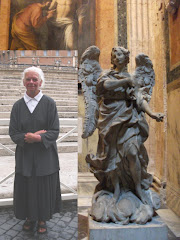
My beloved beautiful Mama, I miss you.

The Vatican

The Vatican
my photography - July 2011

Mama and I

Mama and I

Life of Flowers

2009

2009
The year before at TGFriday, for Mom's bday


Cairo


JULY-AUGUST 2011 EVENTS

JULY-AUGUST 2011 EVENTS

Barcelona, Spain

Barcelona, Spain
22 - 26 July 2011


Rome, Italy

Rome, Italy
26 - 29 July 2011


JULY-AUGUST BIRTHDAYS!

JULY-AUGUST BIRTHDAYS!

Farida, Farah, Nariman 23 Sep. 2010

Farida, Farah, Nariman 23 Sep. 2010
Nariman's 5 on 31 July, twins 7 on 23 Sep. 2011

Eid El-Adha

Eid El-Adha

SEPTEMBER-OCTOBER BIRTHDAYS!

SEPTEMBER-OCTOBER BIRTHDAYS!

Yasmine on 2nd Sep., I on 20 Oct.

Yasmine on 2nd Sep., I on 20 Oct.
Yasmine and I in Spain - and then Italy! July 2011


Funny Animation

READ ALL ABOUT IT!

READ ALL ABOUT IT!

Prayers

Athan (azan)

LOOK!

LOOK!
Look down on your left, at the huge directory!

Useful Telephone & Address Directory

Useful Telephone & Address Directory
Look far down, on your left....

Tourism, Travel

Tourism, Travel

Interviews

Interviews
dancers, choreographers, editors, inventors,

Anger Management

Stress Management

What's Up, Doc?!

What's Up, Doc?!
Read all about REAL medical problems - and solutions!

Good Relationships

Good Relationships
Rapport & Pacing

Getting Closer to Your Kids...

Domestic Violence

Domestic Violence
All Children Deserve to be Happy & Safe

Health & Nutrition

Health & Nutrition

Consume Good Food, Not Medicine!

Hot Stuff For Adults!

Hot Stuff For Adults!

'Hallal' Relationships

Business Know-How

Business Know-How
Corporate & Business Tips soon follows!


Time Management

Time Management

How To's...

How To's...
...handle paperwork, e-mails, etc.!

Sports

Sports
Walk, sprint, jog or run, for good health!


Dance & Ballet

Dance & Ballet


The 7 Wonders of the World

The 7 Wonders of the World

Political Opinions

Political Opinions
Foreign Politics

Filing Systems

Filing Systems
How to..Make an Office or Company Filing System

Coming Soon....

Coming Soon....
Read All About It!

DON'T MISS THIS!

DON'T MISS THIS!

Beauty Tips

Beauty Tips

Escavations, Egyptology

Escavations, Egyptology
Primitive Discoveries

Road Maps

Road Maps

Industrial Safety Tips

Industrial Safety Tips
Read also safety against terrorism in "How Safe is Your Hotel?"

Entertainment!

Entertainment!

Hits Counter

Evolution of Dance

Elvis Presley - Suspicious Mind (1970)

Elvis - Suspicious Minds


ta-da!

ta-da!
Start reading from HERE, or choose from the Index!
Showing posts with label Environment. Show all posts

11 August 2008

More about: Deterioration of the Red Sea


More about: “Deterioration of the Red Sea”

By Hoda Nassef

Wanting to buy a gift for my old school-friend visiting Egypt, I searched the shops downtown, in Garden City, and Zamalek. In each of those three districts, there was at least one shop selling handmade artifacts, which I enjoyed browsing through. But, to my dismay, each shop displayed beautiful appliqués and other crafts, all made of seashells and huge chunks of coral reef as the main centerpiece. How on earth are they still getting the coral reef, when it is, or should be, absolutely forbidden?

We exchanged gifts and then I grumbled about the shops all boldly displaying broken chunks of coral reef. She laughed and said I was becoming more ‘Americanized’ than she was, and admitted that it was a pity that we Egyptians are not really concerned with our own environment. She said that in Sharm El-Sheikh, everywhere you go, they sell handcrafts in the hotels’ boutiques or nearby shops, and even around the hotels’ swimming pools, all made of coral reef. Some ‘objects of art’ were turned into corner-table lamps, or simply used as house decorations, with other sea objects clustered around the coral.

To aggravate me even more, she said that most of the hotels that have been constructed there actually used explosives to make their artificial lakes, lagoons and swimming pools, disregarding the damage to the sea creatures, fish, and coral reef. Ironically, some of the same hotels afterwards were eventually named as “green hotels”, indicating that they were “environmentally friendly”! What a joke!

We are really self-destructive. How can we pretend to be aware of our environment, let alone CARE about it, when we ruin the environment with our own ignorance or greed? The beautiful Red Sea is ‘an endangered species’: it is in mortal danger.

Musing on the word “red” (El Bahr El Ahmar’ translates to The Red Sea, in Arabic) - researchers are still perplexed as to why this sea was named ‘red’. My theory is that the sun reflecting the crimson hues off the aura of the rocky hills surrounding it during sunsets, and mirroring it into the transparent sea, has inspired this name for earlier settlers. Yet again, it may be due to the unique coral reefs.

The Red Sea has been estimated to be between 20 and 40 million years old, as a result of the continental platforms drift that steadily separated Africa and Asia (and is actually still happening) thus creating the African Rift that extends up to the Jordan Valley and the Dead Sea Depression. Egypt has nearly 1,000 km of coast on the Red Sea, together with the whole perimeter of Sinai, surrounded by the Strait of Suez and the Gulf of Aqaba. The Red Sea is 2,350 kilometers long and 350 kilometers wide at its widest point off Ethiopia, covering a total area of 450,000 square kilometers.

Since prehistoric time, the Red Sea has been one of the busiest and most important sea routes of the world. All ancient civilizations of the Region established outpost-trading communities on the shores of the Red Sea. Between these outposts lived scattered traditional societies. These pastoral or fishing groups never reached high population densities and archeological evidence suggests that their way of life survived unchanged for thousand of years.

In “Habitat”, it stated that the Red sea possesses unique characteristics that cannot be found anywhere else on earth. The Strait of Suez and the Gulf of Aqaba close it in to the north, and the Strait of Bab El Mandeb (gate of tears) closes it in to the South at a depth of roughly 100 meters, forming a basin. This separates the Red Sea substantially from the system of currents of the Indian Ocean. Because of this 'semi-continuity' with the ocean, the Red Sea is an ecosystem of the Indo-Pacific variety. It is unique in that the Red Sea is home to around 20 percent of endemic fish species in the world, and for the particularly varied coral reefs (more than four hundred species of coral have so far been recorded). Because its deep waters can reach temperatures of 32 degrees centigrade due to volcanic activity on the seabed, the almost total lack of tides, and its regular currents - driving northwards in winter and southwards in summer - the Red Sea constitutes a fantastic and unrivalled botanical niche.

Furthermore, I read that the Red Sea contains ‘representatives’ of all major tropical marine habitats, and such high diversity of habitats (i.e. their natural environment) in the Egyptian Red Sea coast are occupied by a large and diverse number of marine animals. These animals have adapted to sharing of resources and the perfect use of available spaces. Such harmony may be affected by the human interference during the exploration of the coastal plains, not to mention constructing residential areas right along its borders.

There are several groups of animals that inhabit the Red Sea, other than fish. These include turtles and sea birds. The other marine mammals, which are recorded, include seven species of dolphin, and whales. It is thought that such minor diversity of mammal species is due to the geographical nature of the Red Sea entrances, the salinity, as well as low primary productivity.
Marine turtles form a prominent part of the fauna of the Red Sea. The areas on the shore where the turtles choose as nesting sites are very limited to small number of sites in South Sinai and few spots on the south Red Sea coast. Many of these turtles have reported to lay their eggs on offshore islands. All the marine turtles of the Red Sea are considered threatened and both the green and hawk-bills are declared endangered species.

While reading ‘Global Plan of Action’, it mentioned that the coastline of Egypt is undergoing extensive habitat alteration, due to construction, including ‘dredge and fill’ operations of shallow areas, excavation of artificial lagoons, mining and quarrying. Suspended fine sediments resulting from these activities can inflict widespread damage to coral reefs, seagrass beds, mangroves and other marine life, over distances of dozens of kilometers from the source. Several urban centers have been developed along the coast at Suez, Hurghada and Sharm El Sheikh. As we know, Egypt is the site of the most extensive tourism development on the Red Sea. But, tourism development constitutes a serious threat to both the marine environment and the tourism industry itself, if not planned and developed on a sound environmental basis with the effective enforcement of environmental regulations.

I discovered that on Egypt's Hurghada coast, which is the most affected, sediments from coastal alteration activities have spread to extensive fringing reefs down the coastline and to the adjacent islands and offshore reefs, where they are damaging corals and mangroves.

Another main sources of pollution on Egypt's Red Sea coast is the discharge of poorly treated or untreated sewage matter into the marine environment. Tourism areas located outside city limits have their own sewage treatment facilities, but most tourism areas on the coast of the Red Sea and Gulf of Aqaba meet their fresh water requirements through the desalination of seawater or groundwater.

It has been reported that areas such as Hurghada and Sharm El Sheikh have been developed and exploited beyond their ecological capacities and are already showing signs of environmental degradation. ‘Global Plan of Action’ also states that evidence of reef degradation due to tourism and other activities is clear, even in pristine areas such as the Ras Mohamed National Protected Park, because the coasts have become a repository for large quantities of industrial, commercial and residential trash and other solid waste. Often this takes the form of plastics, metal containers, wood, tires and even entire scrapped automobile parts at some localities!

In some areas containing extensive metal and industrial debris, the potential exists for toxic substances to leach into the marine environment. Wooden pallets and driftwood may form a physical barricade to female turtles crawling up beaches to nest. Damage to coastal and other vegetation from the use of vehicles is also evident in the Red Sea region. This not only reduces vegetation available for birds, grazing mammals and other wildlife, but also causes loss of ‘halophytes’ that can destabilize sand dunes bordering many shore areas.

Together with dredging, coastal reclamation probably represents one of the most negative impacts on the coastal marine environment of the Red Sea. Apart from the direct and permanent loss of habitat, landfill usually increases sedimentation. Inadvertent coral breakage by divers and improper mooring by diving and fishing boats, as well as damage due to sediment stir-up by diving activities, in addition to collecting corals, starfish, urchins, and other sea creatures, may ultimately cause loss of diversity in marine habitats and degradation of coral reefs.

In addition, the Middle East harbors more than half of the world's proven oil reserves, thereby ranking as the world's largest oil production area. The Red Sea, therefore, carries significant oil traffic as well as drilling sites. Oil spills, pollution from machines, oily mud sediment, and drilling into the reefs themselves are some of the unfortunate by-products of the industry.

‘Global Plan of Action’ also remarked that the Red Sea is unique and not found elsewhere in the world. Its enclosed nature, together with limited water exchanges with the Indian Ocean, considerably reduces the potential for dispersion of pollutants. This is especially so in the relatively shallow Gulfs of Suez and Aqaba, as compared to the main body of the Red Sea which is very deep along most of its length.

The predicted increase in number of people either visiting or working along Egypt's Red Sea coastline require more sewage disposal and discharges which deplete the quality of the very amenities which attract tourism in the first place: clean beaches, pleasant weather and the spectacular underwater reefs.

We should protect our God-given blessings, and not let our economical need for growth overlook the vital importance of “growing”, yet under professional supervision and management. I fear that after we have exhausted all possible space and ways of ruining the Red Sea and the Red Sea Coast, we will greedily look forward to ruining the Mediterranean Sea and the spectacular Northern Coast.

H.N.

28 January 2008

Back To Mother Nature

Back To Mother-Nature

By Hoda Nassef

Egypt is rich in tourism. It is a haven for tourists and offers all types of tourism for all tastes, nationalities, and budgets. To name a few: Antiquities, Cultural, Recreational, Conference, Shopping Tourism, Health Tourism, Water Sports, Desert Safaris, as well as Song, Dance & Film festivals, and last but not least, Eco-Tourism.

According to experts in the field of Tourism, eco-tourism should be endorsed and promoted to its full potential, especially as we have several protected parks for rare animals and species of migrating birds in Sinai, El-Rayan Oasis, Fayoum and other spots throughout the country. This is what they don’t have in their own countries, and is atypical of their own tourism. This is what they would come for.

Why imitate the West? It is true that our beautiful luxurious five-star hotels and beach resorts are flourishing here, but they are also flourishing all over the world. Its clientele in Egypt are mainly the Arab nationals, and it also caters to some élite Egyptians who prefer this type of arrangement for a weekend, or a week, at the most. But even the élite and celebrities here now have their own private chalets and villas, which they now prefer to an expensive stay at any of these hotels or resorts, unless they are celebrating a wedding or want to be in the limelight.

The majority of vacationers, Egyptians or foreign residents, opt for a more casual accommodation and rustic atmosphere. They don’t need to pay so much for that. Why pay exorbitant hotel fees, when they stay out all day, then use the hotel only to sleep in? Twenty years ago, Sharm El-Sheikh had only 3 and 4-star hotels. Thirty years ago, it wasn’t even on the map! Dahab and Nuweiba consisted of native Bedouin tribes, and the daredevils who ventured to go there, went by jeep and slept in tents. But, they loved it! They went back for more, guarding preciously their secret getaways! Nowadays, they are searching for new remote areas unknown to the rest of the world. But, alas! - To no avail. Therefore, eco-tourism is the solution and preferred alternative.

Our topography, climate, environment, and Protected Parks combined, are more suitable for casual tourism. Most of our visitors travel across the world in order to see our antiquities (Ancient Egyptian, Moslem, Coptic relics and monuments) – or to enjoy our superb unrivalled beaches. Hotel resorts abroad, even in Italy, have stony beaches, unlike our soft white or golden sand. Our turquoise water in the Northern coast, and aquamarine water of the Red Sea, are unique and rich in marine life and sea creatures, and the waters are crystal-clear and warm all year round. Most importantly, our coral reefs are incomparable. Added to that, Sharm El-Sheikh, Taba Heights, Taba, Marsa Allam and Ras Mohamed, are the best places in the world for diving, whereas what Hurghada offers is unmatched for sailing, fishing, windsurfing, scuba diving, and underwater photography, and hosts international competitions for these sports as well.

Consequently, the Ministry of Tourism encourages eco-tourism, which not only helps preserve our protected parks, but also endorses environmentally friendly hotels, “green hotels”, and environmental awareness amongst tourists, hotel managers and employees alike. New Eco-Lodges are in the process of construction. The first of its kind, constructed over ten years ago, 40 km south of Taba, is the Basata (“simplicity”) village. There is also the Nesima Hotel in Dahab, which is a bit more modernized than the rest, and there are some eco-lodges in Siwa, in the Western Desert, as well. Everything else is built, or rather made, from natural resources and material of the same environment (such as wood, bamboo, clay, mud, palm leaves, etc.) Other eco-lodges are on their way, or in blueprint, such as in Wadi (Oasis) Ryan, overlooking the salty lakes of Fayoum.

Back-packers, or economy tourists, who prefer nature and a casual leisurely atmosphere, would be delighted to discover the eco-lodges budding throughout Egypt. Besides, most tourists or local vacationers want to relax and get away from their humdrum lives, or stressful jobs, and see something new. The majority of tourists, if you notice, are getting back to basics, whether in life, religion, and even vacation destinations. Yes, they are getting back to nature, as with everything else.

However, real estate developers of beach resorts, are still concentrating on deluxe hotels, which is very good in itself, yet the owners seem to forget that this type of luxury is accessible everywhere else in the world, and, usually cheaper than in Egypt. We cannot rely only on our “friendly service” behind our “friendly smiles” if the tourist feels that he is being ripped off! We should get realistic, and reduce cost of accommodations, facilities and products for foreigners. Foreign guests see clearly the difference in the hotel fees they are charged, (as in everything else) in comparison to what Egyptians pay.

Construction everywhere should be limited and well-organized. As one foreigner said: “Egypt is one big construction site”! Clean up, please! Or, get the job done faster, in a cleaner and more expedient way, to back up your clichés of environmental awareness! Besides, why should we go out of our way to do something (or build something in this case) totally uncharacteristic of our land, our environment, our culture even, and our traditions? Eco-tourism, in my opinion, should be endorsed and encouraged to its full potential. Eco-tourism and eco-lodges are more characteristically in tune with our environment, our climate, our nature, and landscape. We don’t really have beautiful flora and luscious green surroundings for such extravaganzas, except the few plants, palm trees, and artificial lawns carpeting our hotels’ courtyards! So, let’s use our good assets. Egypt has plenty. And let’s use our common sense. Egyptians have plenty to be proud of, enjoy … and share with its guests!


H.N.

29 October 2007

Eco-Tourism

Eco-Tourism
Eco-tourism; Eco-lodges: environmentally friendly…as well as healthy.

By Hoda Nassef


Egypt is rich and a haven for tourists, and offers all types of tourism, for all tastes, nationalities, and budgets. To name a few: Antiquities, Cultural, Recreational, Conference, Shopping, Health Tourism, Water Sports, Desert Safaris, as well as Song, Dance & Film festivals, and last but not least, Eco-Tourism.

According to experts in the field of Tourism, eco-tourism should be endorsed and promoted to its full potential, especially as we have several protected parks for rare animals and species of migrating birds in Sinai, El-Rayan Oasis, Fayoum and other spots throughout the country. This is what they don’t have in their own countries, and is atypical of their own tourism. This is what they would come for.

What is eco-tourism, and what are eco-lodges? According to Dr. Moustafa Fouda, Director of Nature Conservation Sector, Egyptian Environmental Affairs Agency, Ministry of Tourism: “The concept of eco-lodges, especially in, around and surrounding protected parks, caters to a new type of tourist, demonstrating that Egypt has more to offer than the Nile Valley and beaches. A more diversified tourism product will increase revenues, and some of these revenues can be reinvested in conservation. In principle, therefore, we should seek ways to accommodate eco-lodges within the protected area network of Egypt.”

Dr. Fouda said that the Eco-Lodge concept has a number of attractive features that are likely to influence the Nature Conservation Sector's attitude towards Parks and Tourism development. Egypt, along with most other countries, is well aware that it cannot afford an attitude of strict preservations with respect to its protected area heritage. He also confirmed that a compromise is inevitable along the principle that people must be encouraged to become partners for conservation and not become a threat to it. Conservation rooted in sound sustainable development principles will therefore guide us forward.

“Eco-lodges are an integral complement of the landscape, requiring that access be given to that environment. And that alone would access the needed environmental information and education. It is also sensitive to noise pollution, it promotes architecture harmony, design and material, and it is sensitive to the types of material used in its construction,” he added.

Eco-Lodges were first noticed, studied, and applied by the late Professor Hassan Fathy, the Pioneer of eco-lodges. According to Prof. Fathy, eco-lodges really began several years ago when he discovered in 1964 the “miracle” of Nubian architecture. Unlike what most may think, they are not enforced housing units for the poor, but rather a chosen way of life and culture.

Why should we imitate the West? It is true that our beautiful luxurious five-star hotels and beach resorts are flourishing here, but they are also flourishing all over the world. Its clientele in Egypt are mainly the Arab nationals, and also caters to some élite Egyptians who prefer this type of arrangement for a weekend, or a week, at the most. But even the élite and celebrities here now have their own private chalets and villas, which they now prefer to an expensive stay at any of these hotels or resorts, unless they are celebrating a wedding or want to be in the limelight.

The majority of vacationers, Egyptians or foreign residents, opt for a more casual accommodation and rustic atmosphere. They don’t need to pay so much for that. Why pay exorbitant hotel fees, when they stay out all day, then use the hotel only to sleep in? twenty years ago, Sharm El-Sheikh had only 3 and 4-star hotels. Thirty years ago, it wasn’t even on the map! Dahab and Nuweiba consisted of native Bedouin tribes, and the daredevils who ventured to go there, went by jeep and slept in tents. But, they loved it! They went back for more, guarding preciously their secret getaways! Nowadays, they are searching for new remote areas unknown to the rest of the world. But, alas! - To no avail. Therefore, eco-tourism is the solution and preferred alternative.

Our topography, climate, environment, and Protected Parks combined, are more suitable for casual tourism. Most of our visitors travel across the world in order to see our antiquities (Ancient Egyptian, Moslem, Coptic relics and monuments) – or to enjoy our superb unrivalled beaches. Hotel resorts abroad, even in Italy, have stony beaches, unlike our soft white or golden sand. Our turquoise water in the Northern coast, and aquamarine water of the Red Sea, are unique and rich in marine life and sea creatures, and the waters are crystal-clear and warm all year round. Most importantly, our coral reefs are incomparable. Added to that, Sharm El-Sheikh, Taba Heights, Taba, Marsa Allam and Ras Mohamed, are the best places in the world for diving, whereas Hurghada offers is unmatched for sailing, fishing, windsurfing, scuba diving, and underwater photography, and hosts international competitions for these sports. There exists eco-tourism at the Nubian eco-lodges, as well.

Consequently, the Ministry of Tourism is starting to encourage eco-tourism, which not only helps preserve our protected parks, but also endorses environmentally friendly hotels, “green hotels”, and environmental awareness amongst tourists, hotel managers and employees alike. New Eco-Lodges are in the process of construction. The first of its kind, constructed over ten years ago, 40 km south of Taba, is the Basata (“simplicity”) village. There is the Nesima Hotel in Dahab, which is a bit more modernized than the rest, and there are some eco-lodges in Siwa, in the Western Desert, as well. Everything else is built, or rather made, from natural resources and material of the same environment (such as wood, bamboo, clay, mud, palm leaves, etc.) Other eco-lodges are on their way, or in blueprint, such as in Wadi (Oasis) Ryan, overlooking the salty lakes of Fayoum.

According to Architect, Urban Planner & Environmental Consultant, Ali El-Sharkawi, the eco-development project at the Oasis in Fayoum is first of its kind, in that the whole development will apply strict environmental rules. It is also one of the protected areas, and is situated on top of the stony hills, overlooking the sunny view of the upper lake, with the dilated desert in the background. “This project,” he said, “is built in accordance to the strictly applied environmental rules and regulations (EEAA) for the terrain. It is also one of the protected areas, and the sports center is based on the same rules, in that it should respect the nature and habitat of the place. The whole project’s elemental materials are appropriate to the local ones, such as mud bricks, stone, tree trunks, branches, power wind stations, and a water treatment plant.” The project not only preserves the natural environment and habitat, but also gives work to the native Bedouins; local artisans and craftsmen (and craftswomen!), local horse and camel breeders, and the ‘hospitality’ people.

Back-packers, or economy tourists, who prefer nature and a casual leisurely atmosphere, would be delighted to discover the eco-lodges budding throughout Egypt. Besides, most tourists or local vacationers want to relax and get away from their humdrum lives, or stressful jobs, and see something new. The majority of tourists, if you notice, are getting back to basics, whether in life, religion, and even vacation destinations. Yes, they are getting back to nature, as with everything else.

We have three main types of environment of interest to the tourist:

1. Marine life
2. Desert, open and mountainous
3. Sites of significant bird migration

Each of these requires separate consideration in respect of lodging. Currently not all areas representing these three types are in protected areas with the result that there is a wide range of lodging on offer for tourists from the free market. There is everything from massive 5-star constructions to reed and mat hostels. We enter such a market with due caution.

Dr. Fouda further stated that for ‘conservationists’, every compromise with development has a number of costs associated with it. Guidelines must therefore be even more rigorous within parks than outside of them. Actions that compromise the overall conservation value of any protected area undermine the principles upon which it was declared and therefore serve no one in the long run. However, within this rather restrictive statement, there is a great deal of room for manoeuvre.

So what then of the TDA concept, and how might we adjust it to fit within the concepts of protected area management?

For tourism, there will be an obvious increase in tourists. This alone would be considered beneficial. But tourists visiting protected areas would be a new type of tourist, demonstrating that Egypt as more to offer than just the Nile Valley and beaches. A more diversified tourism product will increase revenues and some of these revenues can be re-invested in conservation. In principle, therefore, we will seek ways to accommodate eco-lodges within the protected area network of Egypt.

Let us please not forget that:

· Every track and trail for a motor vehicle is a source of erosion;
· Every visitor is a potential source of litter;

Visitors may be tempted to remove plants, animal remains, geological and prehistoric artefacts:

· Every facility that accommodates a visitor generates problems for solid waste management;
· Every facility erected has an impact on the landscape, and
· Every facility erected requires materials for construction.

So guidelines are required to keep these types of disturbances to a minimum. The TDA's vision is sensitive to many of these issues:

· It promotes architectural harmony in design and materials, and
· It is sensitive to the types of material used in construction.


It promotes an Eco-Lodge, not an a hotel, but an integral component of the landscape in which it is set, requiring that access be given to that environment, and that along with access goes information and education.

· It is sensitive to noise pollution.

In many well-established parks on this continent, no building may be erected that cannot be completely removed within a specified time period. Such a statement challenges architects and designers to innovate without sacrificing client comfort.

In other situations tourist facilities in buffer zones are required to provide significant benefits to local communities; in some cases going as far as giving them land tenure rights which force tourism companies into direct contractual relations with local communities. This actively promotes a partnership between people and parks.

In Egypt there are unique challenges. Dr. Fouda’s statements asks the following:

1. How can we stop bird netting in northern Sinai without robbing people of an important source of income?

2. How can we cater for the mass religious tourism attracted to St. Catherine's Protectorate, without encouraging further unsightly developments?

3. Would Eco-Lodges be the answer to the pressures we face to open up more of the Red Sea islands?

4. Can we use Eco-Lodges to attract more of the international bird-watching community to Egypt's migratory splendours?

5. Are Eco-Lodges the way to open remote areas, such as Gabal (Mt.) Elba to high paying, low impact tourism, that can promote a better understanding of a fragile eco-system and the complex socio-economic structures that have evolved there?

6. If we are to take the next step, and in truth we already have in places such as St. Catherine's and Wadi (oasis) Rayan, then we must be absolutely clear as to the policy which will guide us. We need to be far more stringent than the TDA. After all, the job of any official tourism organization will always be to promote more tourism. More means also new job creations and foreign exchange revenues. More certainly does not mean better for those of at the TDA charged with the responsibilities of the conservation of natural resources. Dr. Fouda wryly commented that the 'more' in this case is usually more disturbances and more conflicts. However, they recognize that in Egypt its resources are not ‘conserved & protected’, simply to be locked away. Rather, they are conserved in order to be appreciated and enjoyed.

7. To support open access without compromising the integrity of a protected area is not simple matter. It requires a combination of good policy and sound management, supported by adequate resources.

Furthermore, limits to carrying capacity must be established. Is should be guided in setting these by estimating:

· How many people a protected area can accommodate, given that most people remain grouped close to the key sites of interest and their lodging. Some indicators will be of the tourist's own perceptions of when visitor numbers affect his/her enjoyment of the site; when littering becomes a problem, and when tracks and trails become both unsightly and prone to erosion.

· The overall conservation value of key areas. Some protected areas share geological and landscape features with others. Others have unique and rare attributes that can be shared by few but not all, if they are to remain conserved. Such significant conservation values must then be translated into significant economic values. Other sites may be too costly in research terms, therefore may need to be kept closed.

· The resources available to us (TDA) will greatly affect our ability to absorb visitors. There is no point in laying out tracks and trails if we cannot ensure that they are well kept. We should not invest in building visitor and education facilities if we cannot recruit and train staff to train them efficiently.

These are generic issues not directly related to Eco-Lodges, but they do guide us into better understanding what sort of tourist is appropriate in Egypt's protected areas.

The TDA’s role as custodians of Egypt's protected area network, intend to play their part in promoting tourism, BUT on their terms, and to the benefit firstly to conservation and only secondly of tourism. Eco-Lodges within protected areas and their buffer zones must therefore promote conservation values while generating revenues for the maintenance of the protected area system. If conservationists or TDA’s personnel cannot generate revenue, they cannot manage visitor numbers and maintain the infrastructure that will guide people around a park.

We need, therefore, to select operators and determine bed numbers. It is vital that an operator of an Eco-Lodge in a protected area be our partner or an investor, with a clear commitment to conservation. We need to review architectural guidelines with an investor to ensure that landscape values are enhanced and not diminished, as has been the case with much development at St. Catherine's. Each protected area will have clearly different priorities.

Our desert eco-systems are where care will be taken to control vehicle access. Perhaps only Lodge vehicles (such as house trailers) may take visitors into the desert following pre-determined routes. It is here that opportunities exist to involve the local communities in more than just demonstrating traditional skills and customs. There are significant opportunities in ensuring that they have an economic stake in management in order to use conservation as a tool to bring marginal economic groups into mainstream economic development.

The key migratory bird sites are potential areas for significant expansion in Eco-Tourism in Egypt. While we will never compete with the mega-fauna of East, Central and Southern Africa, we do have sites for bird-watchers unparalleled anywhere in Africa, except perhaps at key locations in the Great Rift Valley. It is also little known that Egypt has wildlife sites of international significance. It is here that the Eco-Lodge concept can perhaps make the greatest contribution.

Hassan Fathy, the great naturalist and architect, perhaps started this trend in his constructions. In conclusion, we would like to applaud the TDA's initiative in promoting a diversification of Egypt's tourism market through Eco-Lodge development. It creates a challenging opportunity for us in conservation, and an opportunity that we should grasp. What remains for us to do is to promote more eco-lodges and inquire as to the basics by the experts. Thus, the first steps are to arrange the following:

1. A dialogue with TDA as to what constitutes sustainable Eco-Tourism development in a buffer zone.

2. To adapt the TDA's guidelines to establish Eco-Lodges which reflect the unique requirements of the Protectorates. Development within a protected area can only take place according to contractual conditions that ensure that the integrity of a protected area is not compromised by either the construction itself or the supporting infrastructure of visitor numbers.

3. To ensure that the revenues generated by Eco-Lodge developments in protected areas and their buffer zones develop significant revenues that are applied for the benefit of conservation.

What better way to conclude this, than to quote “the Master”, the late Prof. Hassan Fathy? He said:

“A building should always be constructed in such a way, that it is in accordance with the nature of the site itself. The longevity of Sultan Hassan Mosque at the Citadel in Cairo, for example, is due to the precise incision and orientation of the stone excavated from the quarry. The stone used to construct the eastern elevation, came from the eastern part of the quarry. The stone built for the northern elevation came from its complementary northern section of the quarry, and so forth.”


H.N.

26 October 2007

Deterioration of the Red Sea

Deterioration of the Red Sea!

By Hoda Nassef

Wanting to buy a gift for my old school-friend visiting Egypt, I searched the shops downtown, in Garden City, and Zamalek. In each of those three districts, there was at least one shop selling handmade artifacts, which I enjoyed browsing through. But, to my dismay, each shop displayed beautiful appliqués and other crafts, all made of seashells and huge chunks of coral reef as the main centerpiece. How on earth are they still getting the coral reef, when it is, or should be, absolutely forbidden?

We exchanged gifts and then I grumbled about the shops all boldly displaying broken chunks of coral reef. She laughed and said I was becoming more ‘Americanized’ than she was, and admitted that it was a pity that we Egyptians are not really concerned with our own environment. She said that in Sharm El-Sheikh, everywhere you go, they sell handcrafts in the hotels’ boutiques or nearby shops, and even around the hotels’ swimming pools, all made of coral reef. Some ‘objects of art’ were turned into corner-table lamps, or simply used as house decorations, with other sea objects clustered around the coral.

To aggravate me even more, she said that most of the hotels that have been constructed there actually used explosives to make their artificial lakes, lagoons and swimming pools, disregarding the damage to the sea creatures, fish, and coral reef. Ironically, some of the same hotels afterwards were eventually named as “green hotels”, indicating that they were “environmentally friendly”! What a joke!

We are really self-destructive. How can we pretend to be aware of our environment, let alone CARE about it, when we ruin the environment with our own ignorance or greed? The beautiful Red Sea is ‘an endangered species’: it is in mortal danger.


Musing on the word “red” (El Bahr El Ahmar’ translates to The Red Sea, in Arabic) - researchers are still perplexed as to why this sea was named ‘red’. My theory is that the sun reflecting the crimson hues off the aura of the rocky hills surrounding it during sunsets, and mirroring it into the transparent sea, has inspired this name for earlier settlers. Yet again, it may be due to the unique coral reefs.

The Red Sea has been estimated to be between 20 and 40 million years old, as a result of the continental platforms drift that steadily separated Africa and Asia (and is actually still happening) thus creating the African Rift that extends up to the Jordan Valley and the Dead Sea Depression. Egypt has nearly 1,000 km of coast on the Red Sea, together with the whole perimeter of Sinai, surrounded by the Strait of Suez and the Gulf of Aqaba. The Red Sea is 2,350 kilometers long and 350 kilometers wide at its widest point off Ethiopia, covering a total area of 450,000 square kilometers.

Since prehistoric time, the Red Sea has been one of the busiest and most important sea routes of the world. All ancient civilizations of the Region established outpost-trading communities on the shores of the Red Sea. Between these outposts lived scattered traditional societies. These pastoral or fishing groups never reached high population densities and archeological evidence suggests that their way of life survived unchanged for thousand of years.

In “Habitat”, it stated that the Red sea possesses unique characteristics that cannot be found anywhere else on earth. The Strait of Suez and the Gulf of Aqaba close it in to the north, and the Strait of Bab El Mandeb (gate of tears) closes it in to the South at a depth of roughly 100 meters, forming a basin. This separates the Red Sea substantially from the system of currents of the Indian Ocean. Because of this 'semi-continuity' with the ocean, the Red Sea is an ecosystem of the Indo-Pacific variety. It is unique in that the Red Sea is home to around 20 percent of endemic fish species in the world, and for the particularly varied coral reefs (more than four hundred species of coral have so far been recorded). Because its deep waters can reach temperatures of 32 degrees centigrade due to volcanic activity on the seabed, the almost total lack of tides, and its regular currents - driving northwards in winter and southwards in summer - the Red Sea constitutes a fantastic and unrivalled botanical niche.

Furthermore, I read that the Red Sea contains ‘representatives’ of all major tropical marine habitats, and such high diversity of habitats (i.e. their natural environment) in the Egyptian Red Sea coast are occupied by a large and diverse number of marine animals. These animals have adapted to sharing of resources and the perfect use of available spaces. Such harmony may be affected by the human interference during the exploration of the coastal plains, not to mention constructing residential areas right along its borders.

There are several groups of animals that inhabit the Red Sea, other than fish. These include turtles and sea birds. The other marine mammals, which are recorded, include seven species of dolphin, and whales. It is thought that such minor diversity of mammal species is due to the geographical nature of the Red Sea entrances, the salinity, as well as low primary productivity.

Marine turtles form a prominent part of the fauna of the Red Sea. The areas on the shore where the turtles choose as nesting sites are very limited to small number of sites in South Sinai and few spots on the south Red Sea coast. Many of these turtles have reported to lay their eggs on offshore islands. All the marine turtles of the Red Sea are considered threatened and both the green and hawk-bills are declared endangered species.


While reading ‘Global Plan of Action’, it mentioned that the coastline of Egypt is undergoing extensive habitat alteration, due to construction, including ‘dredge and fill’ operations of shallow areas, excavation of artificial lagoons, mining and quarrying. Suspended fine sediments resulting from these activities can inflict widespread damage to coral reefs, seagrass beds, mangroves and other marine life, over distances of dozens of kilometers from the source.

Several urban centers have been developed along the coast at Suez, Hurghada and Sharm El Sheikh. As we know, Egypt is the site of the most extensive tourism development on the Red Sea. But, tourism development constitutes a serious threat to both the marine environment and the tourism industry itself, if not planned and developed on a sound environmental basis with the effective enforcement of environmental regulations.

I discovered that on Egypt's Hurghada coast, which is the most affected, sediments from coastal alteration activities have spread to extensive fringing reefs down the coastline and to the adjacent islands and offshore reefs, where they are damaging corals and mangroves.

Another main sources of pollution on Egypt's Red Sea coast is the discharge of poorly treated or untreated sewage matter into the marine environment. Tourism areas located outside city limits have their own sewage treatment facilities, but most tourism areas on the coast of the Red Sea and Gulf of Aqaba meet their fresh water requirements through the desalination of seawater or groundwater.

It has been reported that areas such as Hurghada and Sharm El Sheikh have been developed and exploited beyond their ecological capacities and are already showing signs of environmental degradation. ‘Global Plan of Action’ also states that evidence of reef degradation due to tourism and other activities is clear, even in pristine areas such as the Ras Mohamed National Protected Park, because the coasts have become a repository for large quantities of industrial, commercial and residential trash and other solid waste. Often this takes the form of plastics, metal containers, wood, tires and even entire scrapped automobile parts at some localities!

In some areas containing extensive metal and industrial debris, the potential exists for toxic substances to leach into the marine environment. Wooden pallets and driftwood may form a physical barricade to female turtles crawling up beaches to nest. Damage to coastal and other vegetation from the use of vehicles is also evident in the Red Sea region. This not only reduces vegetation available for birds, grazing mammals and other wildlife, but also causes loss of ‘halophytes’ that can destabilize sand dunes bordering many shore areas.

Together with dredging, coastal reclamation probably represents one of the most negative impacts on the coastal marine environment of the Red Sea. Apart from the direct and permanent loss of habitat, landfill usually increases sedimentation. Inadvertent coral breakage by divers and improper mooring by diving and fishing boats, as well as damage due to sediment stir-up by diving activities, in addition to collecting corals, starfish, urchins, and other sea creatures, may ultimately cause loss of diversity in marine habitats and degradation of coral reefs.

In addition, the Middle East harbors more than half of the world's proven oil reserves, thereby ranking as the world's largest oil production area. The Red Sea, therefore, carries significant oil traffic as well as drilling sites. Oil spills, pollution from machines, oily mud sediment, and drilling into the reefs themselves are some of the unfortunate by-products of the industry.

‘Global Plan of Action’ also remarked that the Red Sea is unique and not found elsewhere in the world. Its enclosed nature, together with limited water exchanges with the Indian Ocean, considerably reduces the potential for dispersion of pollutants. This is especially so in the relatively shallow Gulfs of Suez and Aqaba, as compared to the main body of the Red Sea which is very deep along most of its length.

The predicted increase in number of people either visiting or working along Egypt's Red Sea coastline require more sewage disposal and discharges which deplete the quality of the very amenities which attract tourism in the first place: clean beaches, pleasant weather and the spectacular underwater reefs.

We should protect our God-given blessings, and not let our economical need for growth overlook the vital importance of “growing”, yet under professional supervision and management. I fear that after we have exhausted all possible space and ways of ruining the Red Sea and the Red Sea Coast, we will greedily look forward to ruining the Mediterranean Sea and the spectacular Northern Coast.


H.N.H.N.

The Platters


New York


Powered By Blogger

Your (VULGAR) Sexual Libido!


Thank you for visiting!

Hits Counter