






Abdel-Fattah El-Sisi, President

Abdel-Fattah El-Sisi, President
New President of Egypt, 8 June 2014

watching a bad era end

watching a bad era end
nighmare 2012-2013

23 Dec. 2011

23 Dec. 2011
My beloved beautiful Mama, I miss you.

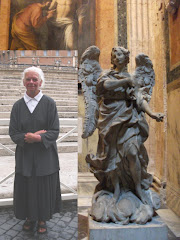
The Vatican

The Vatican
my photography - July 2011

Mama and I

Mama and I

Life of Flowers

2009

2009
The year before at TGFriday, for Mom's bday


Cairo


JULY-AUGUST 2011 EVENTS

JULY-AUGUST 2011 EVENTS

Barcelona, Spain

Barcelona, Spain
22 - 26 July 2011


Rome, Italy

Rome, Italy
26 - 29 July 2011


JULY-AUGUST BIRTHDAYS!

JULY-AUGUST BIRTHDAYS!

Farida, Farah, Nariman 23 Sep. 2010

Farida, Farah, Nariman 23 Sep. 2010
Nariman's 5 on 31 July, twins 7 on 23 Sep. 2011

Eid El-Adha

Eid El-Adha

SEPTEMBER-OCTOBER BIRTHDAYS!

SEPTEMBER-OCTOBER BIRTHDAYS!

Yasmine on 2nd Sep., I on 20 Oct.

Yasmine on 2nd Sep., I on 20 Oct.
Yasmine and I in Spain - and then Italy! July 2011


Funny Animation

READ ALL ABOUT IT!

READ ALL ABOUT IT!

Prayers

Athan (azan)

LOOK!

LOOK!
Look down on your left, at the huge directory!

Useful Telephone & Address Directory

Useful Telephone & Address Directory
Look far down, on your left....

Tourism, Travel

Tourism, Travel

Interviews

Interviews
dancers, choreographers, editors, inventors,

Anger Management

Stress Management

What's Up, Doc?!

What's Up, Doc?!
Read all about REAL medical problems - and solutions!

Good Relationships

Good Relationships
Rapport & Pacing

Getting Closer to Your Kids...

Domestic Violence

Domestic Violence
All Children Deserve to be Happy & Safe

Health & Nutrition

Health & Nutrition

Consume Good Food, Not Medicine!

Hot Stuff For Adults!

Hot Stuff For Adults!

'Hallal' Relationships

Business Know-How

Business Know-How
Corporate & Business Tips soon follows!


Time Management

Time Management

How To's...

How To's...
...handle paperwork, e-mails, etc.!

Sports

Sports
Walk, sprint, jog or run, for good health!


Dance & Ballet

Dance & Ballet


The 7 Wonders of the World

The 7 Wonders of the World

Political Opinions

Political Opinions
Foreign Politics

Filing Systems

Filing Systems
How to..Make an Office or Company Filing System

Coming Soon....

Coming Soon....
Read All About It!

DON'T MISS THIS!

DON'T MISS THIS!

Beauty Tips

Beauty Tips

Escavations, Egyptology

Escavations, Egyptology
Primitive Discoveries

Road Maps

Road Maps

Industrial Safety Tips

Industrial Safety Tips
Read also safety against terrorism in "How Safe is Your Hotel?"

Entertainment!

Entertainment!

Hits Counter

Evolution of Dance

Elvis Presley - Suspicious Mind (1970)

Elvis - Suspicious Minds


ta-da!

ta-da!
Start reading from HERE, or choose from the Index!
Showing posts with label People. Show all posts

14 July 2008

Death of a Giant: Dr. Michael DeBakey


The Death of a Giant: Dr. Michael Ellis DeBakey

Born:September 7, 1908 (1908-09-07) Lake Charles, Louisiana, United States
Died: July 11, 2008 (aged 99; almost 100) Houston, Texas, United States
Alma mater: Tulane University
Religious beliefs:Maronite Catholic

Famed Heart Surgeon Michael DeBakey Dead at 99 (Sun. 13 – July 2008)

Michael DeBakey, the man who first performed heart bypass surgery, died Friday night at Methodist Hospital in Houston at the age of 99 from natural causes, the Associated Press reported Saturday.

The renowned cardiovascular surgeon invented many devices to help the ailing human heart; while still in medical school in 1932, he designed the roller pump, which became a key part of the heart-lung machine and opened the door to open-heart surgery. He also was behind the first efforts to develop artificial hearts and heart pumps for those waiting for heart transplants.
In 2006, DeBakey even underwent a procedure that he himself had developed -- the surgical repair of a damaged aorta.

While at the Baylor College of Medicine, officials there said, he helped transform the school into a nationally respected medical institution.

"Dr. DeBakey's reputation brought many people into this institution, and he treated them all: heads of state, entertainers, businessmen and presidents, as well as people with no titles and no means," Ron Girotto, president of the Methodist Hospital System, told the AP.
Cardiovascular surgeon Dr. George Noon called his professional partner "the greatest surgeon of the 20th century," who "single-handedly raised the standard of medical care, teaching and research around the world."

Biography

Early life:

Michael Ellis DeBakey was born as Michel Dabaghi in Lake Charles, Louisiana, to Maronite Lebanese immigrants Shaker and Raheeja Dabaghi (later Anglicized to DeBakey).

Medical career:

DeBakey received his BSc degree from Tulane University in New Orleans. In 1932, he received an M.D. degree from Tulane University School of Medicine. He remained in New Orleans to complete his internship and residency in surgery at Charity Hospital. DeBakey completed his surgical fellowships at the University of Strasbourg, France, under Professor René Leriche, and at the University of Heidelberg, Germany, under Professor Martin Kirschner. Returning to Tulane Medical School, he served on the surgical faculty from 1937 to 1948. From 1942 to 1946, he was on military leave as a member of the Surgical Consultants' Division in the Office of the Surgeon General of the Army, and in 1945 he became its Director and received the Legion of Merit. DeBakey helped develop the mobile army surgical hospital (MASH) units and later helped establish the Veteran's Administration Medical Center Research System. He joined the faculty of Baylor University College of Medicine (now known as the Baylor College of Medicine) in 1948, serving as Chairman of the Department of Surgery until 1993. DeBakey was president of the college from 1969 to 1979, served as Chancellor from 1979 to January 1996, he was then named Chancellor Emeritus. He was also Olga Keith Wiess and Distinguished Service Professor in the Michael E. DeBakey Department of Surgery at Baylor College of Medicine and Director of the DeBakey Heart Center for research and public education at Baylor College of Medicine and the Methodist Hospital.

DeBakey's ability to bring his professional knowledge to bear on public policy earned DeBakey a reputation as a medical statesman. He was a member of the medical advisory committee of the Hoover Commission and was chairman of the President's Commission on Heart Disease, Cancer and Stroke during the Johnson Administration. He has worked tirelessly in numerous capacities to improve national and international standards of health care. Among his numerous consultative appointments was a three-year membership on the National Advisory Heart and Lung Council of the National Institutes of Health.

DeBakey served in the U.S. Army during World War II and helped to revolutionize wartime medicine by supporting the stationing of doctors closer to the front lines. This concept greatly improved the survival rate of wounded soldiers and resulted in the development of Mobile Army Surgical Hospital (MASH) units during the Korean War.

Medical pioneer:

At age 23, while still in medical school at Tulane University, DeBakey invented the roller pump, the significance of which was not realized until 20 years later, when it became an essential component of the heart-lung machine.[10] The pump provided a continuous flow of blood during operations. This, in turn, made open-heart surgery possible.

With his mentor, Alton Ochsner, he postulated in 1939 a strong link between smoking and carcinoma of the lung. DeBakey was one of the first to perform coronary artery bypass surgery, and in 1953 he performed the first successful carotid endarterectomy. A pioneer in the development of an artificial heart, DeBakey was the first to use a external heart pump successfully in a patient — a left ventricular bypass pump.

DeBakey pioneered the use of Dacron grafts to replace or repair blood vessels. In 1958, to counteract narrowing of an artery caused by an endarterectomy, DeBakey performed the first successful patch-graft angioplasty. This procedure involved patching the slit in the artery from an endarterectomy with a Dacron or vein graft. The patch widened the artery so that when it closed, the channel of the artery returned to normal size. The DeBakey artificial graft is now used around the world to replace or repair blood vessels.

In the 1960s, DeBakey and his team of surgeons were among the first to record surgeries on film. A camera operator would lie prone atop a surgical film stand made to Dr. DeBakey's specifications and record a surgeon's eye view of the operating area. The camera and lights were positioned within three to four feet of the operative field, yet did not interfere with the surgical team.

DeBakey worked together with Dr. Denton Cooley, while they both practiced at Baylor College of Medicine. According to the April 18, 1969 issue of Life magazine, they had a disagreement associated with Cooley's apparently unauthorized implantation of the first artificial heart in a human. The disagreement turned into a bitter feud that lasted for decades; the two men reconciled only in 2007, but DeBakey made it public by inviting Cooley to the presentation of the Congressional Gold Medal. Debakey was a perfectionist and intolerant of incompetence, and was known to be brutal to surgical trainees and co-workers and would fire surgical assistants who made minor errors.

To the amazement of his colleagues and patients, DeBakey continued to practice medicine into an age well after most others have retired. DeBakey practiced medicine until the day he died, and nearly reached 100 years of age in 2008. His contributions to the field of medicine spanned the better part of 75 years. Dr. DeBakey operated on more than 50,000 patients, including several heads of state. Dr. DeBakey and a team of American cardiothoracic surgeons, including Dr. George Noon, supervised quintuple bypass surgery performed by Russian surgeons on Russian President Boris Yeltsin in 1996.

During 1969, the Baylor College of Medicine separated from Baylor University under his direction. The DeBakey High School for Health Professions, the Methodist DeBakey Heart & Vascular Center and the Michael E. DeBakey Veterans Affairs Medical Center in Houston in the Texas Medical Center in Houston are named after him. He had a role in establishing the Michael E. DeBakey Heart Institute at the Hays Medical Center in Kansas. Several atraumatic vascular surgical clamps and forceps that he introduced also bear his name.

In 1969, he received the Presidential Medal of Freedom. In 1987, President Ronald Reagan awarded him the National Medal of Science. He was a Health Care Hall of Famer, a Lasker Luminary, and a recipient of The United Nations Lifetime Achievement Award, the Presidential Medal of Freedom with Distinction, and The National Medal of Science. He was given the Lifetime Achievement Award of the Foundation for Biomedical Research and in 2000 was cited as a "Living Legend" by the Library of Congress. On April 23, 2008, he received the Congressional Gold Medal from President George W. Bush, Speaker of the House Nancy Pelosi and Senate Majority Leader Harry Reid.

In 1987 and 1990, Debakey was investigated by the Texas Medical Board for having more than three malpractice lawsuits in a five year period. Both investigations were dismissed. However, in 1994, his Texas medical license was delinquent for nonpayment.

Health issues:

On December 31, 2005, at age 97, DeBakey suffered an aortic dissection. Years prior, DeBakey had pioneered the surgical treatment of this condition, creating what is now known as the DeBakey Procedure. He was hospitalized at The Methodist Hospital in Houston, Texas.
Dr. DeBakey initially resisted the surgical option, but as his health deteriorated and DeBakey became unresponsive, the surgical team opted to proceed with surgical intervention. In a controversial decision, Houston Methodist Hospital
Ethics Committee approved the operation; on February 9–10, he became the oldest patient ever to undergo the surgery for which he was responsible. The operation lasted seven hours. After a complicated post-operative course that required eight months in the hospital, at a cost of over one million dollars, Dr. DeBakey was released in September 2006 and returned to good health. Although DeBakey had previously refused surgery, he later stated that he was grateful that his surgical team performed the operation.

He was present at Baylor College of Medicine for the groundbreaking of the new Michael E. DeBakey Library and Museum on October 18, 2006.

OBITUARY:


On July 11, 2008, DeBakey died of natural causes at The Methodist Hospital in Houston.

DeBakey was preceded in death by his first wife, Diana Cooper DeBakey who died of a heart attack in 1972 and by his sons, Houston lawyer Ernest O. DeBakey, who died in 2004, and Barry E. DeBakey, who died in 2007. His brother Dr. Ernest G. DeBakey died in 2006. Ernest DeBakey was a cancer specialist in Mobile, Alabama. In addition to his wife, Katrin, and their daughter, Olga, DeBakey is survived by sons Michael and Denis, as well as sisters Lois and Selma DeBakey, who are both medical editors and linguists at Baylor.

Honors

Lifetime Achievement Awards from the Academy of Medical Films
American Heart Association (AHA)
Children Uniting Nations
Encyclopaedia Britannica
Foundation for Biomedical Research
International College of Angiology
International Health and Medical Film Festival
Research! America
Tulane Medical Alumni Association
U.S. Army Legion of Merit (1945)
American Medical Association Hektoen Gold Medal (1954 and 1970)
Rudolph Matas Award in Vascular Surgery (1954)
International Society of Surgery Distinguished Service Award (1958)
Leriche Award (1959)
American Medical Association Distinguished Service Award (1959)
Albert Lasker Award for Clinical Medical Research (1963)
American Medical Association Billings Gold Medal Exhibit Award (1967)
American Heart Association Gold Heart Award (1968)
Union of Soviet Socialist Republics Academy of Sciences 50th Anniversary Jubilee Medal (1973)
Russian Academy of Medical Sciences Foreign Member (1974)
Veterans of Foreign Wars Commander-in-Chief’s Medal and Citation (1980)
American Surgical Association Distinguished Service Award (1981)
Academy of Surgical Research Markowitz Award (1988)
Association of American Medical Colleges Special Recognition Award (1988)
American Legion Distinguished Service Award (1990)
Premio Giuseppe Corradi Award for Surgery and Scientific Research (1997)
Russian Military Medical Academy, Boris Petrovsky International Surgeons Award and First Laureate of the Boris Petrovsky Gold Medal (1997)
John P. McGovern Compleat Physician Award (1999)
Russian Academy of Sciences Foreign Member (1999)
Texas Senate and House of Representatives, Adoption of resolutions honoring Dr. DeBakey for 50 years of medical practice in Texas (1999)
American Medical Association Virtual Mentor Award (2000)
American Philosophical Society Jonathan Rhoads Medal (2000)
Library of Congress Bicentennial Living Legend Award (2000)
Villanova University Mendel Medal Award (2001)
Houston Hall of Fame (2001)
NASA Invention of the Year Award (2001)
MUSC "Lindbergh-Carrel Prize"(2002)
Congressional Gold Medal (April 23, 2008)

Publications

As a lifelong scholar, Dr. DeBakey's writings are reflected in more than 1,300 published medical articles, chapters and books on various aspects of surgery, medicine, health, medical research and medical education, as well as ethical, socio-economics and philosophic discussion in these fields. Many of these are now considered classics. In addition to his scholarly writings, he is a best selling author, having co-authored such popular works as The Living Heart, The Living Heart Shopper's Guide and The Living Heart Guide to Eating Out.

Michael E. DeBakey, M.D.

Pioneer, innovator, miracle maker, Samaritan

Michael Ellis DeBakey is an internationally recognized and respected physician and surgeon, noted for his pioneering work in the field of cardiovascular surgery, as well as for his innovative research into this and other fields of medicine. He is credited with inventing and perfecting scores of medical devices, techniques and procedures which have led to healthy hearts and productive lives for millions throughout the world. Dacron arteries, arterial bypass operations, artificial hearts, heart pumps and heart transplants are common procedures in today's medicine, thanks to Dr. DeBakey.

Additionally, Michael DeBakey is credited with developing the Mobile Army Surgical Hospitals (M.A.S.H.) concepts for the military, which has led to saving thousands during the Korean and Vietnam conflicts. As well, the development of specialized medical and surgical center systems, in order to treat returning military personnel, subsequently became the Veterans Administration Medical Center System, saving many more lives.

Dr. DeBakey has earned an enviable reputation as a medical statesman. He has served as advisor to almost every President in the past fifty years, as well as to heads of state throughout the world. He led the movement to establish the National Library of Medicine, which is now the world's largest and most prestigious repository of medical archives. Dr. DeBakey continues to devote considerable time to national advisory committees and to consultantships in Europe and the Middle and Far East, where he has helped to establish health care systems.

As a lifelong scholar, Dr. DeBakey's writings are reflected in more than 1,300 published medical articles, chapters and books on various aspects of surgery, medicine, health, medical research and medical education, as well as ethical, socio-economics and philosophic discussion in these fields. many of these are now considered classics. In addition to his scholarly writings, he is a best selling author, having co-authored such popular works as, The Living Heart, The Living Heart Shopper's Guide and The Living Heart Guide to Eating Out.

This prolific humanitarian has performed more than 60,000 cardiovascular procedures and has trained thousands of surgeons who practice through the world. He has operated on heads of state, princes and celebrities, as well as paupers, with the same exacting surgical technique and compassion to all. In 1976, his students from throughout the world founded the Michael E. DeBakey International Surgical Society. In appreciation of his untiring pedagogic and investigative efforts, the Trustees of Baylor University, where Dr. DeBakey is Chancellor of Baylor College of Medicine, established the Michael E. DeBakey Center for Biomedical Education, as well as the Debakey Lectureship.

Dr. DeBakey has received numerous honorary degrees from prestigious colleges and universities as well as innumerable awards from educational institutions, professional and civic organizations, and governments worldwide. In 1969, he received the highest honor a United Sates citizen can received, the Presidential Medal of Freedom with Distinction. In 1987, President Ronald Reagan awarded him the National Medal of Science.

With his keen intellect, professional ingenuity, personal integrity and selfless devotion to humanity, Women's International Center is so proud to present the International Samaritan Living Legacy Award to a living legend and a genuine healer of the human heart.

Michael DeBakey
AKA Michael Ellis DeBakey

Bio-Data:

Born: 7-Sep-1908
Birthplace: Lake Charles, LA
Died: 11-Jul-2008
Location of death: Houston, TX
Cause of death: Natural Causes
Gender: Male
Race or Ethnicity: White
Sexual orientation: Straight
Occupation: Doctor, Inventor
Party Affiliation: Republican
Nationality: United States (Lebanese Origin)
Executive summary: Pioneering heart surgeon
Military service: US Army
Father: Shaker Morris DeBakey (el-Dabaghy)
Mother: Raheehja Zorba DeBakey
Brother: Ernest G. DeBakey
Sister: Lois DeBakey
Sister: Selma DeBakey
Wife: Selwa DeBakey
Diana Cooper (m. 15-Oct-1936, d., four sons)

Education:

Member:


Awards:


His nephew, who was a dear friend of mine and has his namesake, died at 36 from an air bomb in Hasmeieh, Lebanon, in 1983. I commemorate them both.

h.n.

27 December 2007

Egypt's Top TV Novelist: Magdy Saber


Egypt's Top TV Novelist: Magdy Saber


By Hoda Nassef

The Top TV serial during the holy month of Ramadan a couple of years ago, was written by the now-famous and ‘en vogue’ top story-teller: Magdy Saber. Not particularly keen on Egyptian TV series and plays, I, amongst millions of other spectators were glued to the TV’s “idiot box” during the month of Ramadan in November 2003, and ending after approximately thirty days, extending to the first week December. Not only was it aired twice a day (at night after the Iftar, then a repeat show the following afternoon) but was also viewed through satellite stations, and in the Gulf and Arab countries. Who is Magdy Saber? How does he write his plots and characters so convincingly and realistically? I felt that this man really knows the psychology of all members in a typical Egyptian family, from children to teenagers, to adults and senior citizens, and the real essence of a contemporary middleclass family. What intrigued me even more, was his portrayal of the women, especially the character of “Faten”; a young and beautiful widowed mother of two teenage children, and how she single-handedly managed to raise them, educate them, keep a job and her own self-dignity without resorting to compromises and several temptations for an easy way out, and without breaking under all the stress, obstacles and intrigues in her path. Meet the man who wrote, amongst other books, “Aina Kalby.”

He likes to joke. I was not aware that he was sitting at the table almost behind me when he made me a phone call through his cell phone. Although we never met, I would have recognized him due to his sudden appearances on television talk shows, yet, he could not have guessed how I looked. After we exchanged greetings, his story rolled on.

“This morning I was at the University of Information. They held a conference in honour of the achievements and rating ballots for best performances during Ramadan, and they honoured all the cast of the last TV serial, “Aina Kalby” (Where is My Heart) A rating ballot had been previously made in order to vote for the best TV programme, best actors, etc. This ballot was made in a very professional and scientific way, and they took votes from various people, in various walks of life and backgrounds, totalling 50,000 votes. The results were as follows: the TV serial “Aina Kalby” won Best TV Serial vote; I won as Best Writer; Magdy Abou Emeira won as Best Director, Yousra as Best Actress. The Best Actor award went to Hassan Youssef for his role in the portrayal of Sheikh Mohamed Shaarawi in a TV serial during the same month of Ramadan last year.”

“Are the awards certificates of merit, or do they include financial bonuses?” I enquired.

“No, they are certificates of merits. And for artists, it is all they really want. To be appreciated by the public, on such a huge scale, is rewarding and more than satisfying. Money can’t replace this. An artist doesn’t appreciate money as much as he appreciates the symbolic award directly from the public; his or her audience. Their votes indicate that they really like you or what you do. This is very important for a writer, and for any artist in general. Furthermore, this is the first Egyptian TV serial that had the highest ratings even outside of Egypt, and the first time that twenty-one Arab and Gulf countries bought it and aired it the same month.”

“Please tell me more about your background. Start from the very beginning. Where and approximately when were you born?” I asked Saber.

“I was born in a tiny village in Sohag, Upper Egypt, in the late fifties, and middle of December. I’m Christian, by the way. My full name is Magdy Michael Saber (pronounced Mee-cha-eel in Arabic). My father was very young when he got married, sixteen actually, and my mother was one year older. I’m a Sagittarius! When I was one year old, we moved to Cairo permanently, and Shoubra was my first real home. The ‘haie’ (popular district) of Shoubra taught me a lot, and rooted my first impressions of Life. I consider Shoubra, or rather call Shoubra ‘the common district of common aristocrats’. In Cairo, my two sisters and brother were born. Wafaa, then Alaa, then Marcelle. Marcelle is ten years younger than I.”

“I went to all-boys’ schools. When I was eighteen, my family moved to Heliopolis, and I entered the Faculty of Commerce, Ein Shams University. It made me miserable, because my dream was to become a doctor! But my final high school grades did not give me this chance. You know, the old ‘title-prestige’ complex most of us had in the past. Being a doctor in Egypt twenty years ago was considered prestigious. But now, of course, mine as well as most of the people’s concept about becoming a doctor has changed. It is not always everybody’s goal now. And, education nowadays offers other options.”

“I started working when I was a university student, at all sorts of odd jobs, ‘here and there’. My father, God rest his soul, died when I was thirty years old, but before that he was sick for a very long time, and I had to help in sustaining my family - as is the tradition with most first-born conscientious sons. In other words, at a very early age I was responsible for supporting my family and studying at the same time. I am now married and have two daughters, Maria, who is nine and Sandra, six. They go to a nuns’ school in the suburbs, because my wife and I also prefer that our daughters do not attend ‘mixed’ schools. I was particularly keen on that. I’m still basically a typical “sa-eedi” (Southern or Upper-Egyptian) in that I don’t encourage mixed schools for girls. They have plenty of time for getting to know boys later on! Now is the time to educate them fully and properly, without outside distractions.”

“When did you start to write?” I asked.

“By chance, I had my first story published when I was a university student. I’ll tell you how it began. My father was a big “tager” (tradesman) of foodstuff from Upper Egypt in ‘souq (market) Rode El-Farag’. He also loved to read, and he eventually formed a big library of sorts inside his shop. So, whenever I had time, regardless of nature of the book, I would read anything I could lay my hands on. Also, a man near our street had a huge display of second-hand books. Every day I would buy five books from my allowance for five piasters. Each book cost me one piaster. Then, I would trade the books for five others the following day. It did not matter what subjects they were about. Maybe this gave me an early awareness and enlightenment on world issues. Reading, and more reading, was my ultimate pleasure and joy in my youth. When I was nine years old and during the summer vacation, I read Anis Mansour’s ‘In the World, and Around the World’ five times. The book had 1,000 pages! But I also read the works of the classic Egyptian writers, and many of the translated works of great authors, as well as scientific books and a sundry of others. Therefore, my love of reading began before I was nine,” added Saber.

“When and what was your first published work?” I enquired.

“I remember that when I was eleven years old, I wrote a political novel about Port Said, and I was awarded first prize of Egypt, competing amongst many older amateurs. I had never visited Port Said, but my intensive readings about it and its war and political situation, motivated me to write. It was my first real attempt at writing.”

“How did you feel when you won?” I asked.

“I don’t really remember the emotions I felt, nor did I realise at that time the importance of the prize, even though it was a sign of my ability to tell a story and be appreciated for it. It did not occur to me that I had talent in writing at that time.” “At least you must have been good in literature and writing compositions at school?” I asked rhetorically. “Yes. I was the first in my class in classic Arabic and literature, as a matter of fact,” he replied.

“And, when I was fifteen, I wrote my first play,” continued Saber. “The strange thing is that it was published, but years later, during my first term at university. “It was a police story, about a theft of antiquities, called ‘The Riddle of the Second Theft’”. He explained that to have it published in the first place was a difficult feat, because “Dar El-Maaref” (an official publishing firm) published only work from known literary figures. There he met Mahmoud Salem (renown children’s book author) who praised his work and told him that it was hard to believe a fifteen-year-old could write so well. He also told Saber not to write anything more until he was more mature, in order to have concrete background experience. Saber took his ‘advice’ seriously, and stopped writing for five years. In any case, the same book was published, without a single change in it, five years later. From there on he was contracted to write serial books on a monthly basis through several publishing firms in Egypt, and in other Arab countries, and by the time he finished university in 1983, he had twenty-five books in the market. His books included series for children, teenagers, and adults.

“What was your first job, after graduation?” I enquired.

“After completing my military service in 1985, I was immediately employed. The Ministry of Finance announced that they wanted 500 employees, and I was the thirteenth chosen from the 11,000 applicants. I thought I would be assigned to the customs duty bureau, which would have been interesting. But I was assigned to the tax department, which I did not like, and I quit after only six months. I hated the boring routine and to be restricted in my movements and imagination. In fact,” he continued, “I discovered that I am against all job routines, and all types of restrictions. My university colleagues were surprised that I quit, while they were still job-hunting. According to them, I should have been grateful for being employed so fast in the first place. But, since then, I have never applied for another job.”

“Refusing to become a regular employee, I chose instead to work as a freelance writer,” Saber continued. “I worked for several Egyptian and Arabic newspapers and magazines, wrote columns, and made cultural and artistic reports, until my name became relatively well known in the world of Arabic journalism. However, my main niche was in writing stories, which I did not cease to do, even while freelancing as a journalist. Due to my limitless imagination, I wrote about three hundred books for children, each one a bit educational or teaching a morale. And, about fifteen years ago, I won the Suzanne Mubarak Prize for children’s literature, for the book called “The Rich Merchant and the Honest Youth”. I wrote also a known series for older children called “The Suicidal Group” about espionage, in which three Egyptian teenagers worked secretly for the government.”

At this point, I remembered his TV serial (The Other Side). It was a unique mystery and suspense story, without the usual exaggeration of most Egyptian TV dramas where the “bad guys” grimace and grunt, while the “good guys” swing angelically on their halos! Saber’s expression of suspense is written more subtly.

I asked him to tell me about his personal life at the time of his growing literary success. “Were you married by then?” I asked, remembering how young his parents were when they got married.

“I got married when I was thirty-two. Thank God I am a happily married man. Maybe my marital stability helps me in achieving my professional goals.”

“When did you first start working for television? What was your first script, or TV serial?” I enquired.

“I also wrote a series of romance novels. It was out of one of these romance novels that I was launched into writing for television for the first time. Ra’ed Labib, who is a TV film director and one of my friends, read the novel and asked me to turn it into a TV script. I told him that I had no experience in scriptwriting, and he said that my stories are almost complete scripts, and all that I needed was to read some more scripts to get the knack of it. I took his advice, read many scripts and discovered that I already write in a script-form, and then I re-wrote the novel he selected as a film. The first two-hour TV film I wrote was in 1996 and went by the name of “El Lekaa’ El-Thani” (The Second Encounter).

Due to the success of the film, I was asked to write whole serials, which was very challenging, and more difficult. So, my first TV serial of 25 shows was called “El Madi Ya’oud El-Ann” (The Past Returns Now). I received lots of praise from everybody, because they said it was difficult to believe that the successful serial was my very first attempt, and won the acclaim it had. For me, it was a matter of ‘to be or not to be’ and their encouragement was my pivoting guidance. I had found my true vocation, so from there on I transformed many of my stories into TV scripts. By the way, both TV shows were bought and aired first by the Gulf and Arab countries, before being aired on local TV.” he said.

“Were any of your novels written for the Cinema?” I asked.

“No. But my strategy is to write first for television, and later to write for cinema and the theatre. Then, I wrote ‘Harrat El-Mahroussa’ (The Mahrousa Alley) in 1997. At first a producer took the story and showed it to the director Magdy Abou Emeira, who liked it on the spot. Emeira got a very big cast of stars for the serial. It was a smashing hit, and it was through the unsuspected success of this second serial that my name became known amongst the TV drama writers, and I was sought out for more work that I had time to handle.

Switching back to his ‘personal’ life, I cheekily asked him, “Was your wife’s joy for this enormous new success the same as her joy when your first novel was published, when you were not yet known?”

He laughed, then said, “No. She did not understand the lifestyle of a writer in demand, at first, and my daily routine had changed a lot. She might have been a bit worried at first, or naturally a bit jealous. But now she understands and appreciates the importance of attending all these meetings. She fully understands if I am out a lot and have lots of meetings to attend.”

“Do you have special moments or hours to write? What inspires you to write, or rather, how and when do you feel like writing?”

“I like to listen to music when I write, or listen to my favourite singers, and I carry with me a little note pad to jot down my thoughts once in a while. You won’t believe this, but I get many of my scenarios and plots when I am sound asleep.” “What? Do you mean when you are relaxing in bed and meditating?” “No. REALLY asleep! While I’m asleep, my subconscious is active. Even if I have some personal problems, I dream about the solutions. And, in many of my stories or scripts, I dream of the plots and scenarios, and then I wake up and remember the whole script in my dream, and write it down.” Unable to fathom such a marvel, I said goggle-eyed, “Then you are lucky. Maybe this talent is a real blessing from God.”

I asked him “ Are your heroines or heroes real-life people; people you have actually met?”

He said that they are a combination of fiction, and people he knows or has heard or read about, and that in ‘Aina Kalby’ nearly all the characters were familiar people not only to him, but also to most of the public or TV spectators. In short, he gets his characters from life, or life’s experiences.

“Since apparently you are a happily married man, that implies that you don’t have outside flings, so how do you know women so well, and write so realistically how a woman would feel and react, and what she would do or say?”

He answered, “I always try to put myself in the other person’s shoes, and imagine what he or she would say or do, and I’ll tell you another secret: observing people. My mind’s eye is like a camera, and I can observe minute details in someone that the ordinary person may not see. And then my imagination fabricates the rest.”

“Who selects the cast or the stars of your novels? And, what is your next project?” I asked.

“I select them because often they are in my imagination while I am writing. I’m working now, or rather writing a new TV serial, starring Elham Shahine. For the moment, the title is called ‘El Attarine’. This is a known ‘popular’ district in Alexandria, and her features and type suits the role. Maybe Hisham Selim will take the leading male role. Also, I am writing a film, a light comedy - not the usual farce - for the silver screen by the name of ‘Halawet Rohh’ (Beauty of the Soul). It depicts corruption in general. We haven’t chosen the cast or stars yet. Finally, I am meditating about a theatre play for the near future.”


H.N.

10 November 2007

The Riverboat Tycoon


The Riverboat Tycoon


By Hoda Nassef


“Once upon a time, an aging Pasha from Upper Egypt dreamt of building a floating palace on the Nile. By 1887, he had designs prepared for his project and started to create his dream. Meanwhile, he collected a number of masterpieces to embellish the interior of his double-decked palace. In 1901, the Pasha passed away, leaving his estate to two daughters. The daughters chose to live in their Cairo mansion, thus abandoning their father's "dream" in Upper Egypt. Nearly a full century later, someone traveling up the Nile exploring its riverbanks, came upon the abandoned and partially sunk palace. This person fell in love with the majesty and luxury he could perceive through the mud and dust. So he went to work looking for the owners of the wreck, the original designs, etc. He acquired it, added two more decks and named the reborn palace: Le Pacha 1901”. This is the Legend.


§ The River Boatman


Mr. Johnny R. Zahra (who prefers now to be called Johnny Giovanni) is both Egyptian and Italian through both sets of ancestors. He is proud to be Italian, and proud to be Egyptian, thus treasures his twin citizenships. Mr. Zahra was born in Egypt on the 24th of November. If you ask him what year, he will smile and tell you to choose the date. True to his Sagittarius Sun Sign, he looks ageless. Take your pick: 35? 55? It doesn’t really matter, does it, when the Host and owner of this famous riverboat greets each customer personally when he can, day or night, interrupting his very busy schedule, and makes you feel really welcomed and right at home.

At first I used to love to take The Pharaohs’ Floating Restaurant, which is the first floating restaurant in Egypt, for invitations and parties. There was just the lunch and dinner cruises. The boat would float all the way past Helwan, then to the opposite extreme, and return quite leisurely and slowly. You had enough time to entertain your friends, have a good meal, see a show, and even dance to a live band. That was more than ten years ago. But when they started adding more trips to their schedules, in order to increase their revenues - (the extra trips included tea-time, sunset hours, midnight cruises -- you name it!) - the original ‘cruise’ schedule terminated faster, with less Nile scenery and mileage; therefore, you had to gobble your meal, then before you got to your dessert and said goodbye to your friends or relatives, you were suddenly docked back and forced to leave in a hurry! The same applies for Scarabee and the other lovely galloping restaurants… At least, at Le Pacha 1901, you can entertain, or be entertained leisurely, and take (reasonably) all the time you want about it!

§ First Impressions


At first, Mr. Zahra was a bit reticent to meet me for the interview, because he prefers to keep a low profile, just as he also protects his customers’ privacy and choice meeting outlets on his boat. He will not reveal the clientele who choose Le Pacha 1901 for their special events, and will not allow any type of “papparazi” ruin their privacy. Yet, news gets round, and apart from the regular ‘unknown’ customer, all the “who’s who’ of Egypt’s élite are known to frequent this famous boat. I was also a bit reticent, because it might be construed as publicity. But, my main object of this interview was about the period this boat was built; revealing its history and the man behind it, was my aim.

However, luckily Le Pacha 1901 is also one of my own favourite meeting places for many events, and I was always intrigued by the “Legend” written on their menus and brochures (which I have copied above). It would be a scoop for the Gazette, I reasoned, to reveal the history and the makings of this ancient boat….

Now, before you get the surprise I got, let me tell you a bit about the Host; this modest man with courage, imagination and ambition. Let me surprise you and introduce you to the real Mr. Johnny Zahra I just discovered, and share with you his dreams that turned into an astonishing reality and smashing success!

§ From Alexandria, to Italy, to Libya


He was born in November, in Egypt, raised and educated in Alexandria, first attending the Saint Marc Secondary School, and later achieving his Bachelors Degree in Economics and Commercial Sciences from Rome University (1961-1965) in Italy. He left for Italy at the end of 1961, and returned to Egypt at the end of 1965. It was difficult to find a job during that period, so he joined his married sister, in Libya on the 5th of December 1965, and with no experience, his youth, some money, and lots of courage, he immediately formed his own trade company there, with the intention of importing pharmaceuticals to Libya.

This caused a one-year setback, in a way, because at that time in Libya, the doctor in charge of issuing licenses had his own private pharmaceutical importation company, and apparently did not want any competitors in his field, so he delayed Zahra’s license for a whole year. Not one to be easily daunted, or idle, Mr. Zahra started importing foodstuff; beginning with eggs, cheese, then butter, and in fact all the basic needs in any kitchen or restaurant.

§ Forming his Agency in Libya


Finally, in 1967, Mr. Johnny Zahra got his license for importing pharmaceuticals to Libya, and gradually became a Bayer A.G., Eli Lilly (USA), and Leo (Denmark) agent, then was soon after in charge of covering the North African market. He had other Egyptian partners in this daring new enterprise.

In 1970, the Libyan government asked all the Italians to leave. At that time, Mr. Zahra had his Italian citizenship, but, he was the only Italian allowed to remain, not because of his joint citizenship (Egyptian-Italian), but because he was an investor there. In any case, he left Libya in 1970, and because of his good reputation in Libya as an agent, he joined Eli Lilly in Italy, as an employee, to cover the European market, at the end of 1971 till 1975.

§ Manager & Co-Owner of President Hotel


In 1975 till 1976, he became the Sales Manger for Eli Lilly, and was in charge of Egypt, Libya and Sudan. During that period, Mr. Zahra, together with some of his friends, built the President Hotel, with the famed “Cellars Bar” (and restaurant) in Zamalek, Egypt. (They had, and still have the best “filet mignons” there!) This probably accounts for the roots of his hotelier and catering business.

That was the turning point of Mr. Zahra’s career, and even life. He found his real aptitude, I believe. He resigned from Eli Lilly and the pharmaceutical business and returned to Egypt as co-owner and manager the President Hotel’s “Cellars” bar and restaurant, from 1977 to 1981.

§ Manager and Co-Owner of Presidential Nile Cruisers


In 1981, with his same partners, they started building boats in Egypt. By 1989, they formed the Presidential Nile Cruises (now comprising eight big floating hotels), and became, at that time, the biggest chain boats company in Egypt - (cruising to and from Luxor and Aswan, along the Nile River) - in which he was co-owner and the Manager.

§ The Turning-Point


In 1989, although still co-owner, he left the management of Presidential Nile Cruises. Now here’s a quiz for you: guess what he started to build, in 1990? Le Pacha 1901! Exactly on the 15th of January in 1990, Mr. Johnny Zahra started building Le Pacha 1901. It was inaugurated two years afterwards. He is the CEO and Owner of this famous ‘ancient’ new boat. “But, what about the ‘legend’ on your menus or brochures?” I asked, puzzled. He smiled, and said that it is just a publicity gimmick, to attract tourists, “who simply love mysterious old places”! Clever man. Don’t be too deceived by his innocent baby-faced smile!

When the idea first came to him to build the boat, he said that at first his friends (his lifetime partners) made fun of him, and told him that a boat that doesn’t float is ridiculous, and a bad investment. To quote Mr. Zahra, they also said that he was “trying to kill a moth, with an elephant”! Mr. Zahra added, “Even Mr. Youssef Gaafar - (Zahra idolizes him, and considers him the dean of tourism in Egypt) - said: ‘Johnny is either a genius or crazy! In my opinion, he’s crazy!!’” He added fondly that Mr. Gaafar also asked how one could build so many restaurants in a boat, without a hotel on top of it. Mr. Johnny Zahra apparently proved to be a genius, after all! At present, all along the Nile banks, there are several similar immobile floating restaurants, after Le Pacha 1901 was built. Good for you, ‘Johnny-come-lately”!

§ “United Company for Touristic Establishment: Le Pacha 1901”


Now you may think that “Le Pacha 1901” is actually 10 years old, and not one century old. Here’s another bonanza for you: wrong again! His boat is TWO years old! Exactly two years ago, this boat was rebuilt, from scratch. In fact, this is not the same boat.

“How could a boat be rebuilt, inconspicuously, and where did you build it?” I asked. He answered that it was built 20km upstream from Cairo, and tugged back to berth, minus one floor, in April 1992. Then, the top deck was added, and made out of wood. He explained that to be able to pass beneath the bridges, the height must not exceed four and a half to six meters. Four meters, if the Nile is “flooded” (in February-March) and up to six meters, when the water has subsided. (Not all the bridges are capable of opening up, to let high boats pass by. Qasr El-Nil Bridge has always had this capacity, unlike the 6th of October Bridge, which is quite high, but not high enough.) His boat has three floors, therefore considered high, which explains why the top floor was built after docking. “Le Pacha 1901” was officially functioning on the 15th of October 1992.

§ Boat & Yacht-building


I asked if there were specialized people or companies in Egypt for building boats and yachts in Egypt, and for maintenance, and he stated that there are a lot of companies for maintenance in specialized fields, (such as maintenance of engines, air-conditioning, etc.) but not one to cover all the categories. He added that the floating hotels usually have their Chief Engineers aboard, who take care of the maintenance, through their staff, or by contracting other specialized companies.

The boat engines, by the way, are similar to big truck and lorry engines (of various brands) ranging between 350 to 500 horsepower, depending on their size. There are many boat and yacht builders, especially in Sinai, but according to Mr. Zahra, the best yacht builders, is the “De Birs” company. They build beautiful sophisticated 25-meter yachts. “The company is totally Egyptian,” he added, “but with Italian, French and English expertise.” He recently visited the yard the previous week, and commented that it was very clean, neat, organized, and typically European.

My ignorance preceded me when I asked him what type of wood did they use in building riverboats. He answered that all riverboats are made of iron, and not wood. Le Pacha 1901 is made totally out of iron, but of course with padded inside with wooden panels, décor, etc. Despite the cast-iron, Zahra said that the boats are built in Egypt without excess sophistication, and almost exactly in the same way the pharaohs used to build them, except that in the pharaoh’s time, other material was used instead of iron. My next question was, “Could Le Pacha 1901 take off, that is, navigate, if you wanted it to?” He said that it would be very easy to make it navigate, by adding an engine. As an afterthought, added that it could not go so far, in any case, due to the low bridges.

§ The Pacha Employees; Government Bureaus; Nile Pollution


I asked him if his boat might be polluting the water, along with all the other riverboats and floating hotels. He assured me that his boat is totally “environmentally friendly”, and is one of the first to have its sewage and drainage system directly connected by pipes on land with the government’s sewage network, and nothing is ever ejected into the Nile River from the boat, and his boat even has its personal water treatment system.

Apart from that, like any 5-star hotel, all his employees (a staff of 350 employees; some working on a rotating-shift basis) are sent to government bureaus to take training courses in industrial safety & vocational hazards’ prevention, and hygiene, security, crises management and firefighting, at a ratio of six new employees each year. Also, personnel from various government bureaus make routine check-ups on Le Pacha 1901.

§ Outlets & Happy Events

15 years ago, Le Pacha 1901 had only two outlets: “Johnny’s Pub” (a bit like the Cellars), and “Le Steak”, which speaks for itself. A month after, he opened an Italian restaurant, called “Piccolo Mondo”. They now have ten outlets. The latest addition is a restaurant for purely Egyptian cuisine, called “Akl Zaman”, and is becoming extremely popular, amazingly without any written publicity. The Johnny’s Pub has recently been transformed into a restaurant, named “l’Asiatique”, with delicious cuisine from India, China, Thailand, and Japan (with authentic Chinese and Thai Chefs) as well as cuisines and dishes from other far-eastern countries. To replace “Johnny’s Pub”, a new bar (and restaurant) has recently opened, named “The Tycoons’”.

Mr. Zahra proudly admits that Le Pacha 1901 has its own clientele; the customers. They choose Le Pacha 1901 to celebrate their special events, as Valentine’s Day, Mother’s Day, Easter & Sham El-Nessim, Christmas and New Year’s Eve, Greek Nights, Salsa Nights, Happy Hours, Halloween, to name a few, and with the holy month of Ramadan coming soon, Le Pacha 1901 offers “Iftar” and “Sehour’ for the fasting clientele. They also have special menus for home/outside deliveries. They are self-sufficient, with their own bakery and fresh bread, and now do a lot of catering outside, ranging from birthdays, to desert safaris, to weddings, etc, handling up to 3,500.

§
Tragedy Strikes

Although I did not want to mention his personally tragedy, telling you about it will enlighten you more on Mr. Johnny Zahra’s inner strength and religious beliefs. Almost all of us have read about his beautiful son’s tragic car accident just a couple of years ago, along with the untimely death of his friend, before their graduation celebration. Mr. Zahra had the support and love of his other son, family, and thousands of friends. Even from strangers. He then turned this personal tragedy into a public campaign against speeding truck drivers, driving while intoxicated by alcohol or drugs, and how to avoid such accidents and tragedies in the future. He had the courage to accept this tragic fate, and even use it to help other people, or at least create public awareness. And, he had the courage and faith to go on, and continue to greet you warmly with his kind smile, as if you are part of his dear family.

§ New Projects…and boat!

Lately, Mr. Johnny Zahra has purchased another REAL restaurant boat that sails in the Mediterranean Sea! Currently it is docked on the shores of Cyprus. Furthermore, he has added a few more restaurants in his Zamalek boat. Good for you, Mr. Johnny!!!

§ No Regrets


With all the people he meets, and from his previous education, Mr. Zahra is perfectly fluent in Arabic, Italian, English, French, (and some Greek). His interests are plenty, and he loves to travel, play tennis, bridge – and meet people. Johnny Zahra concluded:

“I love my job. I took up this career because I like people, and love my friends. All the customers have become my friends. I wouldn’t change this lifestyle and vocation for anything else in the world. Since I’m not rich, money-wise, I think I am rich with friends. That’s my wealth. That’s my true fortune.”


H.N.

Grandma Moses, East & West!


Grandma Moses, East & West!


By Hoda Nassef


For Mrs. Hoda Ali El-Ghayaty, widow of Dr. Mohamed El-Bahay, former Minister of “El-Awqaf” (‘Endowments’), life began at fifty-five! After raising her daughter, two grandchildren, three step-grandchildren, and several great-grandchildren, she found herself suddenly with lots of spare time on her hands, and decided to fulfil her dream of improving her skills in drawing. She found her chance at the Italian School in Heliopolis, and took painting lessons in 1980 for seven years, with German Sister Hedwige as her teacher. Afterwards, with persistence and dedication, her hobby turned professional, and transformed her from the dutiful housewife and granny, into a renowned talented artist.

Hoda El-Ghayaty was born in Geneva in 1924 of a French-Swiss mother, and the well-known Egyptian patriot, writer and poet, Ali El-Ghayaty. He created his own newspaper in 1922 in Switzerland and called it “Tribune d’Orient”. Ali El-Ghaiaty was in exile for 27 years in Switzerland during the reigns of Fouad and Farouk, due to his famous book “Wataniaty” (My Patriotism) where he met and wed his Swiss wife Lucienne (who changed her name to ‘Soraya’, after embracing Islam) and who later gave birth to his only son (Ali) and five daughters (Jamila, Leila, twins Monirah and Sorayah, and lastly, Hoda).

All the sisters were strongly influenced by their only brother, Ali, who graduated with first-class honours from the Beaux Arts in Paris in 1935. He would have been one of the “greats” in art of the 20th century, had it not been for his very short lifespan, caused by a mysterious bullet wound in a hunting accident in Port Suez when he was thirty-four. Jamila, (then married to renowned poet Dr. Mokhtar El-Wakil) a natural artist, started watercolour sketches in her unique modernism style at the age of fifty, and displayed her art in a gallery in Switzerland. (Jamila even started ice-skating at fifty, later winning several medals in championships in ice-skating ballet).

Leila (married to renowned lawyer Dr. Moustafa El-Hefnawy) drew for her family only, while Monirah with an inborn talent (married to late Mohamed Aly Beq Nassef, renowned writer, journalist, Press Attaché at the Egyptian Embassy in Washington D.C., Egypt’s Censorship Director, Cultural & Media Advisor at the American Embassy) – made her own greeting cards, joined the Cairo Opera Chorale as a Mezzo Soprano, drew intricate portraits in fine china-ink for posters at the film industry, then settled for mandolin lessons; all in her late forties - (her twin sister died as a baby of 15 months, in Geneva) Then along came the youngest, Hoda, who tried her luck in drawing, starting at the age of fifty-five!

From 1980, not only did Hoda El-Ghayaty learn how to paint in water colour and oil on canvas, cardboard, paper or wood, but also learnt how to make wooden floor-screens, engraving their borders in intricate relief by a burning tool, and painting the central panels in scenic designs, copying Japanese, Oriental or Rococo backgrounds. Without realising or planning it, she launched herself into a successful painting career.

Her best attributes are her oil portraits of bearded old men, or landscapes in fine detail, which she copies identically from several sources. In my opinion, the most difficult thing in oil painting to simulate is flesh, material texture, water, trees, animals, and the sky. But, she has painstakingly mastered all, and her sunsets, fields and forests, mirrored sea or ocean reflections, ragged peasants or smart Bedouins, still life or horses in motion, are astonishingly natural.

Following her career with great interest, I noticed a gradual maturity and improvement in her technique. From 1987, Hoda El-Ghayaty gave painting lessons at the French Cultural Centre, and simultaneously participated in many exhibitions sponsored by them, with other local artists. In 1990, El-Ghayaty had a one-man show of her paintings at the Palace of Arts, within the Opera House compound, and then three other exhibitions at the former French Cultural Centre in Heliopolis from 1991 till 1995. Afterwards and up till the present, she participated almost yearly in art expositions with other contemporary artists. Her last exhibition was at the Hanager Gallery on the Opera grounds early in 2003, with local artists. One of her paintings was sold for L.E.1,000. In fact, her painting was the only sale of the day!

The culminating and happiest moment of Hoda El-Ghayaty’s career was when she was invited to display her art abroad, for the very first time, four years ago. In July 1999, her most successful exhibition was in Boulogne-Sur-Mer, France, at the Galerie d’Art et d’Essais. Furthermore, one can now read about her on their website, as well as other local websites through the Internet.

El-Ghayaty, a very young-looking and dynamic great-grandmother, who daily commutes in her little golden car, acquired her own art studio three years ago, where she has art classes for children and adults, and personally gives them painting lessons. In the meantime, she is in the process of preparing for her next art exhibition due early next spring in 2004.

For Art Lessons at the Atelier, Children and Adults, telephone: 2266 8556

By now, you are probably wondering what is the connection here with ‘Grandma Moses’. No, I’m not blaspheming any Prophet or Saint. For those who don’t already know it, Grandma Moses is the nickname of another very real (American) artist, who started her career after seventy! Following is Grandma Moses’ amazing story, which is not less amazing than that of Hoda El-Ghayaty:

Mrs. Thomas Salmon Moses (later famed as “Grandma Moses”) was born on September 7, 1860 in Greenwich, New York, U.S.A She lived for one hundred and one years (1860-December 13, 1961).

Most of Anna Mary Robertson’s life was spent in eastern New York State where she was the child of a Scottish-Irish farm family and led what she later described as a very happy childhood, which began as one of ten children of a farmer who painted landscapes in his spare time. Her father encouraged her to draw and paint on unused newsprint, which he brought home to keep the children busy, and she used berry juice to brighten her pictures.

She learned the “womanly arts’ of her period of cooking, cleaning, sewing, soap making, candle making and so forth by the age of twelve, and was sent to work to nearby relatives as a ‘hired girl’. At twenty-seven she married a ‘hired man’, Thomas Salmon Moses, and moved to the Shenandoah Valley, near Staunton, where they worked as tenant farmers. There she bore ten children (like her mother) but only five survived infancy. Two decades later the Moses family returned to Upstate New York and bought a dairy farm just a few miles from where she'd grown up on the Vermont border.

She never painted until after the death of her husband in 1927, when arthritis forced her to abandon the "worsted pictures" she'd been embroidering. Soon she was offering her oil paintings on pressed wood for sale at county fairs, along with her prize-winning pickles. Her children thought her work was so appealing they encouraged her to transfer her talent with colour and design to painting; her first was on canvas from a threshing machine cover.

Her daughter-in-law took her pictures to the women's exchange in the local pharmacy in Hoosick Falls. Anna’s big break came in 1938 when a travelling collector from New York saw them in the window, and bought the lot. He tried to sell them to museums and galleries, but had little response. The Phillips Collection in Washington D.C. was the first museum to acquire her work, which gradually began to attract much attention.

As a thrifty housewife, Anna “Grandma Moses” was appalled at the high prices her paintings brought and had to have a special manager of her affairs. But Americans loved her work for the nostalgia of happy times in the past they suggested, and were willing to pay large sums for the images she created. The U.S. Office of Information began to promote her painting as representative of America, and in 1939, she was featured in an exhibition at the Museum of Modern Art. By the 1940s, she was a household word and a celebrity who was entertained in the White House.

She had a television interview with Edward R. Murrow when she was over ninety, painted till she was 100, and lived to be 101 years.Facing failing vision and arthritis in her hands, Moses switched to painting with her left hand but never let up on the number of pictures produced per year, although her work became broader and mature in oil-paint technique. By the time of her death in 1961, Moses had created over 1500 works of art. The world commemorated her death a few years ago on December 13. The Bennington Museum in Bennington, Vermont is the primary public repository of her paintings and has two galleries of ongoing exhibitions of her work. It holds the largest public collection of Moses’ paintings in the world, as well as "yarn paintings", art supplies, and the 18th-century tilt-top table Moses painted with rustic scenes and used as her easel. Her paintings epitomize ‘the good old days’ in American history, pure simplicity, beauty, and hope.

Grandma Moses is the pivotal figure of the 20th-century American folk art movement, known for her decorative, landscape and genre paintings of rural New England. She had a precise way of organizing colour and pattern. She soon became internationally popular for her very naïve documentation of rural life in the United States in the late 19th and early 20th centuries.

The true stories of Hoda El-Ghayaty and Grandma Moses are marvels of senior citizenship – east or west – and role models for anyone with a bit of talent, gumption, perseverance, independent living, and optimism.


H.N.

05 November 2007

The Camera Dancer

Sherif Sonbol

By: Hoda Nassef

Whenever I go to the Cairo Opera House to watch a ballet performance, I always notice a quite man sitting in one of the choice chairs, carrying an assortment of cameras, with the lens pointing at the stage. While photographing, he would slink down in his chair to avoid obstructing the view from other spectators, and somehow manage to photograph the ballet performers. Amazingly, each photo would turn out to be a work of art, resembling live paintings on canvas. Intrigued, one day I asked my sister, whose daughter is a ballet soloist, “Who’s that man?” She answered, “Sherif Sonbol, of course!”


Sherif Sonbol and I met just a day after his arrival from America, where he was invited to make an exhibition at the New York Public Library for Performing Arts at the Lincoln Center in New York City. It coincided with the September 11th second anniversary, so it must have been very significant for an Egyptian to be invited during that time.

The first impression you get when you talk to Sherif Sonbol is his gentle manner and politeness, dispelling the myth that most photographers or journalists are nosy, rude and aggressive, at best. His modesty and humility was the next thing that struck me. And, he is extremely sensitive and self-effacing, with slow body movements, but very confident and outspoken, in what he knows best: photography. The third thing that was obvious from the outcome of our conversation, is his candidness and willingness to share his genius in photography by giving credit – either deserved or not – to all people whom he claims helped or influenced his successful career.

Sherif Sonbol was born in Cairo on 6 December 1956, and graduated from the Faculty of Commerce in Cairo, Insurance Department. He freelanced as a photographer, and then started his career as an employee in one of the insurance companies in Cairo. Afterwards, he completed his high studies from the world-renowned Chartered Insurance Institute of London. Harboring a secret dream, after eight years he left the company to pursue his goal in photography as a career.


However, he wanted to back up his hobby with academic studies, and tried to enroll in the Faculty of Applied Arts. That was the first wall he encountered, blocking his path to his dreams. The faculty refused to let Sonbol enroll in night classes, because, as they told him, he already had a university degree in commerce.

Paradoxically, they offered him instead a teaching job at the faculty! Sonbol declined. Not being daunted by this first obstacle, Sonbol persevered and made his first independent photography exhibition two years later, at the new Cairo Opera House, where many high caliber VIPs attended. Coincidentally, during the same exhibition, he was approached by the dean of the photography section of the Faculty of Applied Arts, who then complimented him on his work, and offered him a teaching position at the institute.

The same rationale followed. According to Sonbol, who was once more exasperated, he found it ridiculous that his request to enroll as a student was once more rejected, because of his former degree, yet they wanted him as a teacher! And, once again, he declined the teaching offer.

Since he was already successful as a photographer, why did he insist on enrolling? “Because we don’t have a real photography critique, backed by academic studies. Whenever anyone comments on the pictures, they say it’s nice, or not nice – never giving their reason or details of their opinions. No one is yet a professional critic in photography. And, I wanted to learn!”

Nevertheless, talented and self-taught, he gradually had his work published in several books. His earlier work consisted of the “moulid”, (the Egyptian ‘Mardi gras’) at a time when renowned photographer Antoun Albert was the director of photography at a daily newspaper. Sonbol’s first assignment for the newspaper was to cover the ‘moulid’. When he developed the film, Albert admonished him and told him that they would not do. He then explained to Sonbol that in a “moulid”, one doesn’t use a flash.


Going back again the next day, Sonbol painstakingly photographed everything again, using a completely different technique without a flash. Antoun Albert was Sonbol’s ‘first school of learning,” as well as his idol. Much later, Sonbol covered many “mulids” all over Egypt, not for the newspaper, but for himself, and had his work published by the AUC press.

Almost equaling his passion for photography is his love for ballet. Typical of his perseverance in reaching his goals as a skilled photographer, it is no wonder that he is knowledgeable in every minute detail of ballet choreography; capturing precise movements at the exact precise time on camera – giving each breathtaking picture a timeless frame of beauty and infinity.

His first attempt at photographing a ballet performance was in the mid-seventies. One day he took his camera to a ‘prova’ (rehearsal) of the ballet performance, sat in the ‘baignoire’ at the Gomhouria Theater (before the new Opera House was constructed), and happily clicked away. But, that didn’t last long, because suddenly there was a group of security personnel who barged into the baignoire, and requested him to stop immediately.


Apparently he was distracting the dancers, and had to take the permission from the ballet director “Mike” (Dr. Abdel Moneim Kamel). Leaving unabashed, he developed his film, and returned the next day to show “Mike” the pictures. Reminiscing, Sonbol added, “He said they were ‘nice’, but I felt that he said that only out of politeness. I also met Mrs. Erminia, his wife, who was also the ballet troupe’s Prima Dona (first dancer), and she volunteered to teach me how to be a ballet photographer, reasoning that the Opera Ballet Troupe also needed a photographer of ballet.

That meant that I had to go through every single ballet step and movement and learn and anticipate the exact body movements and pause of each dancer in each dance. It was very crucial that I take the shots without distracting the dancers while at the same time photograph the best movements and poses. The secret is to photograph each movement when it is complete, and not a second too soon, or a second too late.”

With Ms. Erminia’s infinite patience throughout several days, he finally had his first real lessons in photography, and discovered that he wanted to specialize in ballet photography. Erminia Kamel was his ‘second school of learning.’ Five years later, to celebrate the fifth anniversary after inaugurating the new Cairo Opera House, Sonbol’s first book, simply named “The Opera”, was published.

Apart from ballet photography, it is not well known to everyone that he is also an expert at photographing monuments, pharaohs, and architectural structures. His ‘third school of learning’ came through yet another woman, when Eva Schubert, head of the project called “muséums sans frontiers” (MSF) or ‘museums without frontiers’ came to Egypt six years ago, and asked the Minstry of Culture to provide her with ‘antiquities people’ and expert photographers to document Egypt’s museums for the project. Sonbol was selected.


“It was something totally new for me; I would photograph high buildings, using fish-eye lenses, and the structures would become circular, and I thought I invented a unique technique,” he said, smilingly, “And so I smugly sent the pictures to the publisher in Spain. To my surprise, they were rejected! I was informed that the walls of any structure should be angular and appear as natural as possible. So, after several attempts and techniques of modifying these mistakes, they were finally accepted.”

His ‘fourth school of learning’ came, strange as it may seem, through yet another woman: Rita Freed. A great scholar and head of the Egyptian department at the Boston Museum, she came to Egypt, amongst other countries, to photograph some antiquities in order to prepare for her international exhibit in Boston.


Jack Josephson, an Egyptologist, and one of the founders of ARC (American Research Company), who is also an expert photographer, recommended Sherif Sonbol for the job. Through her, Sonbol learnt how to photograph ancient Egyptian relics, statues, mummies, and pharaohs. First, she taught Sonbol how the pharaohs used to light their houses. From there, she taught him the difference between photographing Egyptian statues in the same way they lit their homes during their era, versus taking pictures of Italian statues and monuments. She advised him when to use or not to use special light effects. “The technique is to emulate natural light for the pharaohs, as if in the pharaohs’ era, in order to enhance the relics’ beauty,” he explained.

The documentary book, which is more like a catalogue with various pictures taken by many photographers from all the museums of the world, such as from the Louvers, the Japanese Museum, etc., was published as “Pharaohs of the Sun”, and eventually became a best seller. Two years later, Bompiani Arte, in Milan, published another book, “The Pharaohs”, with Sonbol’s work, along with other international photographers after an exhibition at the Museum of Venice in Italy. Sonbol’s photographs and books with his work were exhibited in many countries abroad, but he only attended one abroad in Münich, Germany, apart from his recent show in New York, USA.

At the moment, Sonbol is waiting for the release of the last book with his work, by Shirley Johnston, about palaces of Egypt. Shirley Johnston was another ‘professor’ for Sonbol’s ‘school of learning.’ As Erminia Kamel taught him appreciation of ballet, Shirley Johnston, his fifth mentor and ‘professor’, taught him everything about volume and architecture. She also taught him precision and perfection.

As for male influences in his academic life, Sonbol said, “The great photographer Antoun Albert, for one, and the late artist Karam Mutawaie, from whom I learnt a lot. I met him while photographing the theatre play “Isis” in which he acted and directed, as well as Dr. Abdel Moneim Kamel, the Artistic Opera Theater Director. Also, I am indebted and grateful to the late journalist Hosni Guindi, without whose support I would not have become officially affiliated to the new Cairo Opera House as their photographer. In fact, I was there since the opening. Many were against this, but he was the only one who backed me up. I am also grateful to Tarek Heggy, who sponsored my first book and many cultural activities in Egypt for a long time. Also, I appreciate the artists Moustafa Nagi and Walid Ouny, amongst others.”

As for his favorite photographer, his prompt reply was, “Antoun Albert. Then, Emile Karam, who is famous for his photos of beautiful faces. Also, Mohamed Youssef, who is never called by his name, but is called ‘el usstaz’ - ‘the professor’. In my opinion, these three men are the masters in photography.” Did he ever photograph in the sea? He said that he tried underwater photography only once. “Who’s your main fan and staunch supporter?” I asked him. “My loyal wife, Samia, who takes good care of me, and is the most important woman in my life,” he replied. “And, what’s the light of your life?” With his sweet lopsided smile, he answered, “My twelve-year old daughter, Hanna. She’s also a ballerina.” Of course!

According to several reports, his exhibition in New York was a great success, and he received international acclaim from the world’s best ballet and photography critics. Anna Kisselgoff, who is the renowned top ballet critic, attended Sonbol’s recent exhibition twice, and told the press while interviewing him that “his pictures are different”, to say the least.

Sherif Sonbol never uses any filters, or any lab tricks. His famed colored ballet photos are direct shots from the stage, to the negatives, with normal cameras. “I’m not keen on black and white. Any child can take a black and white picture, which will always turn out good with any type of camera. I love beautiful colored pictures, and the challenge. The challenge is in taking great colored pictures, and pictures of movement. Furthermore, to differentiate between a good photographer and an expert in colored pictures of movement, like this one, for example”--- (and here I was shown some breathtaking shots of swirled blended colors, with center pieces frozen) --- “You get the movement in a flow, while ‘freezing’ parts or whole persons in the same shot. It all depends on precision and exact timing.”

Other gorgeous pictures are from the ballet of Swan Lake, with shots in a whole new concept. One of the pictures was taken, unlike any other picture ever seen, from a new angel. Unlike all pictures of the ballerinas upright, this was taken from beneath their graceful bows, at stage floor level. Some more were taken from a bird’s eye view, where the ballerinas look like ethereal delicate flowers. Even more the dramatic are the pictures of a performing dance troupe from America (The Harlem Dance Troupe), where the dancers look like statues in white, with dark azure blue as a background, or the dramatic ones of the mass of red bodies ‘thrown’ in revolving round heaps, with black as the only other colour in the background, giving the impression that you are witnessing the Creation and Hell in motion.


Absolutely no filters or lighting tricks were used. Another stunning picture was taken of world acclaimed pianist Ramzy Yassa during a piano recital at the Pyramids Plateau, with the Sphinx as a natural backdrop. The amazing shot depicts Yassa playing piano, at the exact same angel of the Sphinx, and one is bound to believe that the Sphinx is transforming into Beethoven and will perform a duo with Yassa. In fact, Ramzy Yassa was so impressed with the shot, that he turned the picture into a cover for his CDs. Surpassing this stunning picture, are the ones of dancers in motion, with frozen centerpieces, where you define each feature clearly, swathed smooth flows of colors depicting the curves of each movement or swirls of skirts, in one shot.

These are not only photos, but sheer talent and art. Sonbol’s pride was his last picture, and he smilingly said, “This is a new technique, which I invented. For the first time, and without using any tricks, there are two motions in diverse directions. Here you see the dancers with up and down movements; the lines are going straight up and down, and at the same time, underneath is a step-by-step movement, in another direction! You have different kinds of movement in the same picture.” Sonbol’s pictures are more like surrealism paintings and signée works of art, rather than emanating from the metal click of a camera.

In fact, the great artist Mounir Kanaan, who died two years ago, wrote, “A real artist is when you can recognize his work, without seeing his signature. Sonbol’s photos are like that. When I see a photo taken by Sherif Sonbol, I know immediately it’s his, without seeing his name.” He surpassed the impossible. Sonbol, whose endless passion and near-obsession for learning, it is no wonder that he is now the “master’ of all photography masters in ballet – as quoted in Rose El Youssef magazine.

However, despite these merits and achievements, Sonbol seemed sad. “So, what’s the problem?” I asked him. “I was fired, just two days before leaving to the States!” His eyes glistened with unshed tears and he explained that he worked at the new Opera House since its inauguration – almost 20 years ago. A newly appointed director at the Opera House fired him, as well as three or four other artists (all “old-timers”, including singer Sobhy Bedeir), for trifle reasons. Sonbol’s dismissal was due to the lack of photography understanding from the person who fired him.


According to Sonbol, in May 2003, during the Moulid El Nabi orchestra performances, Sonbol’s photos turned out “too dark.” Sonbol explained that they were dark, because the stage curtains were black, and the singers wore black, and he was not responsible for the décor and the dress costumes! He was then told, “Why didn’t you use a flash?” Sonbol answered that it is very well known that nobody uses a flash during live performances. Angered to be talked back to, he told Sonbol that he did not know how to take pictures, and fired him without so much as a warning in advance. Why three months later, after the fact? The Moulid El Nabi was in mid-May, and the ‘discussion’ took place in late August.

As far as I know, a person with a contract cannot be fired without any valid reason, and must first receive a fair verbal warning, then a written warning, and so forth. After a quick investigation, there seems to be some technical or ‘financial’ explanation to this sudden dismissal of a few long-standing artists. On the other hand, how could that be true, since only a couple of months ago we read about the foreign Maestro who was ‘imported’ from abroad, for a monthly salary of thousands in Euros? That contradicts the budget theory.

More puzzling and shocking, is that the world-acclaimed and talented pianist Ramzy Yassa, was also ‘eliminated’! Imagine! A couple of other gifted artists, were also fired; all clean sweep within the same month! What’s going on? Not only were they unjustly fired and without the appropriate and proper legal procedures leading to dismissal, but also any artist who dares talk back, will be dismissed at a whim. Differences of opinion are not tolerated and are used as excuses for dismissal.

To make matters worse, it is becoming more apparent that a few high caliber people without an artistic cell in their veins, who know nothing about gifted artists or art, are now monopolizing and controlling the cultural theme in Egypt. None of the artists dare complain, lest they be deprived of their talent, and livelihood. I certainly hope that the true artist and Minister of Culture Farouk Hosni will protect and reinstate at least two of our national treasures: Ramzy Yassa and Sherif Sonbol.


*Sonbol interview in 2003

H.N.

The Platters


New York


Powered By Blogger

Your (VULGAR) Sexual Libido!


Thank you for visiting!

Hits Counter