






Abdel-Fattah El-Sisi, President

Abdel-Fattah El-Sisi, President
New President of Egypt, 8 June 2014

watching a bad era end

watching a bad era end
nighmare 2012-2013

23 Dec. 2011

23 Dec. 2011
My beloved beautiful Mama, I miss you.

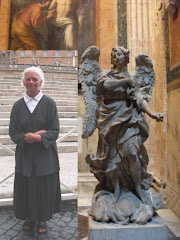
The Vatican

The Vatican
my photography - July 2011

Mama and I

Mama and I

Life of Flowers

2009

2009
The year before at TGFriday, for Mom's bday


Cairo


JULY-AUGUST 2011 EVENTS

JULY-AUGUST 2011 EVENTS

Barcelona, Spain

Barcelona, Spain
22 - 26 July 2011


Rome, Italy

Rome, Italy
26 - 29 July 2011


JULY-AUGUST BIRTHDAYS!

JULY-AUGUST BIRTHDAYS!

Farida, Farah, Nariman 23 Sep. 2010

Farida, Farah, Nariman 23 Sep. 2010
Nariman's 5 on 31 July, twins 7 on 23 Sep. 2011

Eid El-Adha

Eid El-Adha

SEPTEMBER-OCTOBER BIRTHDAYS!

SEPTEMBER-OCTOBER BIRTHDAYS!

Yasmine on 2nd Sep., I on 20 Oct.

Yasmine on 2nd Sep., I on 20 Oct.
Yasmine and I in Spain - and then Italy! July 2011


Funny Animation

READ ALL ABOUT IT!

READ ALL ABOUT IT!

Prayers

Athan (azan)

LOOK!

LOOK!
Look down on your left, at the huge directory!

Useful Telephone & Address Directory

Useful Telephone & Address Directory
Look far down, on your left....

Tourism, Travel

Tourism, Travel

Interviews

Interviews
dancers, choreographers, editors, inventors,

Anger Management

Stress Management

What's Up, Doc?!

What's Up, Doc?!
Read all about REAL medical problems - and solutions!

Good Relationships

Good Relationships
Rapport & Pacing

Getting Closer to Your Kids...

Domestic Violence

Domestic Violence
All Children Deserve to be Happy & Safe

Health & Nutrition

Health & Nutrition

Consume Good Food, Not Medicine!

Hot Stuff For Adults!

Hot Stuff For Adults!

'Hallal' Relationships

Business Know-How

Business Know-How
Corporate & Business Tips soon follows!


Time Management

Time Management

How To's...

How To's...
...handle paperwork, e-mails, etc.!

Sports

Sports
Walk, sprint, jog or run, for good health!


Dance & Ballet

Dance & Ballet


The 7 Wonders of the World

The 7 Wonders of the World

Political Opinions

Political Opinions
Foreign Politics

Filing Systems

Filing Systems
How to..Make an Office or Company Filing System

Coming Soon....

Coming Soon....
Read All About It!

DON'T MISS THIS!

DON'T MISS THIS!

Beauty Tips

Beauty Tips

Escavations, Egyptology

Escavations, Egyptology
Primitive Discoveries

Road Maps

Road Maps

Industrial Safety Tips

Industrial Safety Tips
Read also safety against terrorism in "How Safe is Your Hotel?"

Entertainment!

Entertainment!

Hits Counter

Evolution of Dance

Elvis Presley - Suspicious Mind (1970)

Elvis - Suspicious Minds


ta-da!

ta-da!
Start reading from HERE, or choose from the Index!

19 June 2008

Alexandria


Building Alexandria


By Hoda Nassef


The second largest city in Egypt, Alexandria, known as "The Pearl of the Mediterranean", has an atmosphere that is more Mediterranean than Middle Eastern; its ambience and cultural heritage distance it from the rest of the country although it is actually only 225 km. from Cairo.

Founded by Alexander the Great in 331 BC, Alexandria became the capital of Greco-Roman Egypt, its status as a beacon of culture symbolized by Pharaohs, the legendary lighthouse that was one of the Seven Wonders of the World. The setting for the stormy relationship between Cleopatra and Mark Antony, Alexandria was also the centre of learning in the ancient world. But ancient Alexandria declined, and when Napoleon landed, he found a sparsely populated fishing village.

From the 19th century Alexandria took a new role, as a focus for Egypt's commercial and maritime expansion. This Alexandria has been immortalized by writers such as E. M. Forster and Kefafy. Generations of immigrants from Greece, Italy and the Levant settled here and made the city synonymous with commerce, cosmopolitanism and bohemian culture.
Alexandria is a city to explore at random. It's as important to enjoy the atmosphere as it is to see the sights.

Old Alexandria

Dino-crates built the Hepatisation, the causeway between Pharos and the mainland. This divided the harbours into the Western and Eastern. The Eastern harbour was really where the old harbour from the Middle Ages was located.

Of modern Alexandria, the oldest section is along the causeway which links what was once Pharos island with the mainland and includes the districts of Gumrok (‘customs’; the oldest dating to about the 16th century and known as the customs district) Anfushi, and Ras-el-Tin The latter two districts date to about the period of Mohammed Ali (1805-49). Collectively, these districts are known to westerners as the Turkish Quarter. They have had a number of ups and downs over the years, particularly due to the plague during the 17th century. The area forms somewhat of a T-shape, dividing the Eastern Harbour from the Western Harbour.

This section of Alexandria is known to us more from books then what we may actually see in the area. Where the Pharos Lighthouse once stood, is now occupied by the Fort of Quit Bay, out on the area that circles up around the top of Eastern Harbour forming the eastern section of the top of the T. Heading south from the Fort of Quit Bay, we come to the stunning Abu El-Abbas Mosque. West of this is the Anfushi Tombs, some of the oldest in Alexandria and well worth a visit.

Central Alexandria

The Underwater Discoveries

Relatively new discoveries in the Eastern Harbour involve two different sites. Around Fort Quit Bay the site has unearthed hundreds of objects, including what experts believe are the remains of the Pharos Lighthouse, one of the ancient wonders of the world.

In the southeast part of the harbour archaeologists have apparently found the Royal Quarters, including granite columns and fabulous statues, including one of Isis and a sphinx with a head thought to be that of Cleopatra's father. There may vary well be an underwater exhibit in the future!
Heading towards the mainland past the Abu El-Abbes Mosque and connecting with Sharia Faransa Street leads to the Suq district. Just before entering the district one finds the interesting little Tirana Mosque In the Suq district, one finds Alexandria's only surviving ‘wakalas’, which is a part of the El-Chorbagui Mosque complex founded in 1757. This was also the area where Alexandria's Jewish community lived, but most have now migrated to Israel. Different areas have specialized in different goods and one may find all manner of products from jewellery to Medicinal plants (Suq El-Magharba) to Bedouin clothing (Suq El-Libya).

Continuing down Faransa one passes Midan Tahrir and the street turns into Salah Salem, and finally connects with Al-Horreya. However, Midan Tahrir, popularly called Manshiya, has considerable history. The areas were once home to Diplomats and known as Place Des Consuls, but after the statue of Mohammed Ali was placed here in 1873 the name was changed to Midan Mohammed Ali. In 1882, it was bombarded by the British and all but destroyed. The Alexandria Stock Exchange was once located here, and it was from the midan (square) that Nasser announced the nationalization of the Suez Canal.

The street named Al-Horreya ('tariq' - route - Abdel-Nasser) which transverses the area from east to west was in ancient times the Canopic Way with the Gate of the Sun at the eastern end and the Gate of the Moon at the western end. At that time, there were probably columns lining the road. The main north to South Street, now Sharia (street) El-Nebi (prophet) Daniel, ran from the East Harbour all the way to Lake Harbour on Lake Mariott.

Just south of the intersection of Al-Horreya and el-Nebi Daniel was the site traditionally thought to be the burial place of Alexander the Great, but that has not been located, and may in fact be beneath the Mosque of Nebi Daniel, or in a nearby Greek Necropolis. The famous Alexandria Library was probably nearby. However, the only real antiquities site that can be viewed in the area is Kom el-Dikka; a small Roman theatre that has been excavated. Nearby is also a bath house of the era. To the east is the Antiques District where dealers sell antiquities, books, old weapons and furniture. Here is also the Attarine Mosque, which was once a church dedicated to Euthanasia.

Further south along the tramway is Pompey's pillar and nearby the Catacombs of Kom ash-Shuqqafa.

Wandering along el-Nebo Daniel are several other attractions, including the French Cultural Centre, and nearby the Eliahud Hanabi Synagague, which is the only active synagogue in Alexandria and houses the combined treasures of the seven former Alexandrian synagogues.
Back to the north on el-Nebi Daniel, next to the harbour where Ramla station is now located at Midan Saad Zaghloul was the location of the Cesareum. This was a magnificent temple begun by Cleopatra for her lover Antony and subsequently completed by their enemy Octavian, though none of this remains in situ. Nearby is the well known Cecil Hotel, built in 1930, Sommerset Maugham stayed here, as did Winston Churchill, and the British Secret Service one maintained a suite for their operations.

Midan Saad Zaghloul is the entertainment heart and nerve centre of Alexandria. Here, as terminals and train stations provide a backdrop for cinemas, restaurants and night spots. It was the setting of Lawrence Darrell’s Alexandria Quartet and the famous Alexandria coffee houses. The square is dominated by an impressive monument dedicated to Saad Zaghloul, a former national leader.

The Greek Quarter and Rosetta District

Back on Al-Horreya heading east, as we pass the Greco-Roman Museum (a notable museum well worth a visit) we move into the Greek Quarter of Alexandria, one of the most beautiful residential districts. The wonderful old villas include the massive Miclavez building, which is opposite the Town Hall and nearby the Adda Complex built in 1929. This is where the wealthy Greeks lived at the turn of the century, and the streets are still named after the Ptolemaic, Pharaonic, Abbasid and Fatimid rulers. Further east is the Greek Orthodox patriarchate and the Church of St. Saba.

Further east, Al-Horreya opens into a beautiful green area known as the Shallalat (waterfalls) Gardens, which was once the fortification of Bab Rosetta. But in 1905, Alexandria created a garden area here with waterfalls and the only Alexandria cistern which can be viewed. This cistern is an example of those which once dotted Alexandria providing fresh water to her inhabitants.

The Corniche

The Corniche is doted with Casinos built on stilts and rows of beach huts. The avenue here did not always exist, for until the 20th century, the areas remained fortified by a five mile long wall with towers which had protected the city since the 13th Century. In the early 1900s, a strip of land with a width of about 100 years was reclaimed from the sea, and the area became popular with beach goers. That is no longer the case, but it remains a lively area of Alexandria.

On the western end of the Corniche near Silsila (Chain) where the New Alexandria Library is being constructed is the Shatby Tombs which are said to be the oldest in Alexandria. Nearer the San Stefano area across the tram tracks is also the Royal Jewellery Museum.

El-Mahmoudia Canal

A walk along the Mahmudiya Canal brings one face to face with the working class and industrial districts of Alexandria, and is pleasant along the old paved road bordered by the canal and sycamore trees. South of the Greek district along the canal is the Antoniadis Gardens, which seep with history. Here, the poet Callimatius lived and taught, and in 640 AD, Pompilius prevented the King of Syria from capturing Alexandria. But less then a year later, Amr Ibn el-Aas camped here, before taking the city. The well known Water Traffic Circle is also in the area.
Here one finds the Zoological Gardens, the small Museum of Natural History and the Fine Arts Museum in the Moharrem Bey area, and a Rose Garden. The beautiful public gardens extend into the surrounding area where the Antoniadis Palace is located, and there is even a nearby Roman tomb.

El-Montazah & Montazah Gardens

This area along the coast about 15 miles east of Alexandria's old district along the Corniche is where many of the modern Alexandrian hotels are located, as well as one of the elegant heritage hotels. Khedive Abbas II built the Salamlik as a residence. Here also is the magnificent Montazah Palace.

NOSTALGIE DU PASSE
Nostalgia of the Past

Il y avait une fois un pays bien-aimé,
There was once a city well-loved;
Au ciel bleu d’azur et au sable doré.
With an azure bleu sky and golden sand.
Nous marchions les pieds nus tout le long du rivage,
We walked bare-footed throughout the long beach,
Le soleil sur la peau et le vent au visage.
The sun on our skins and the wind on our faces.
Nous plongions notre corps dans la mer cristalline,
We plunged our bodies into the crystalline sea,
Et le soir nous dansions au son des mandolines...
And at night we danced at the sound of mandolins…
Ce fut un temps jadis, quand nous avions vingt ans,
It was a jaded time, when we were twenty,
Nous étions jeunes et beaux comme un jour de printemps...
We were young and beautiful like a spring day…
Terre de notre enfance, terre où nous sommes nés,
Soil of our childhood, soil of our birth,
D’où un cruel destin nous a déracinés,
From where we were snatched by a cruel destiny,
Nous étions tous unis, on nous a divisés,
Where once we were united, they have separated us,
Et par le monde entier nous sommes parsemés.
And throughout the whole world we were dispersed.
Les jours se sont enfuis et nous cherchons en vain
The days are far apart and we search in vain
Ces moments si précieux d’un passé si lointain...
For those precious moments of a past so far away…
Malgré l’envol du temps et les ans écoulés
Despite the flying of time and trickling away of years
Alexandrie toujours, sera dans nos pensées!
Alexandria will be forever in our thoughts!

Poème: Viviane Borg-Fleri
Poem by Viviane Borg-Fleri

Translation by Hoda Nassef


SOME LISTINGS:-

Cinemas

*Amir Fouad St, Mihatit Al-Raml, Tel (03) 391 7972; 392 7693
*Cairo Seas Tel (03) 543 3350
*Carrefour Beginning of Alexandria-Cairo Desert Road, Tel (03) 397 01565
*Cineplex Green Plaza, Smouha, Tel (03) 532 5745/6
*Al-Deeb Mall Horriya Road, Rushdi, Tel (03) 541 1597/8
*Family San Stefano Opposite Gianaclis tram station, Tel (03) 585 5088
*Ferial Saad Zagloul St, Mihatit Al-Raml, Tel (03) 486 9364
*Metro Safiya Zaghlul St, Mihatit Al-Raml, (03) 487 0432
*Rio 37 Horriya Road, Mihatit Al-Raml, Tel (03) 392 9036
*Royal Next to Sayed Darwish Theatre, Fouad St, Tel (03) 485 5725/7
*San Stefano Tel (03) 469 0056
*Smouha Off Dawaran Zahran, Smouha, Tel (03) 424 5898/9
*Zahran Zahran Mall, Off Dawaran Zahran, Smouha, Tel (03) 424 0844/66

Clubs in Alexandria

* Alexandria British Community Group (ABCG)
• American Women of Alexandria
• Archaeological Society of Alexandria
• Centro de Portugal
• Delta Hash House Harriers
• Friends of the Environment
• German Women of Alexandria
• International Ladies' Club of Alexandria (ILCA)
• Les Amis de la Musique et des Arts
• Old Victorians
• Rotary Club
• Tourist Friends Association
• Women's International Arts and Craft Group of Alexandria

The Alexandria Sporting Club

Built in 1898 and used during the British occupation, the Alexandria Sporting Club is one of the oldest sporting clubs in Egypt. In 1952, it was taken over by the state, converted into a national club (like the El-Gezira Club in Zamalek) and was managed by the Chairman of the Club, Mahmoud Hamdy. Today, the golf course stands on 97 feddans, 97 percent of which constitutes the total club area. It is a flat course with tricky bunkers and can be played by beginners as well as experts. The club also features four restaurants, the Club House Restaurant being the most luxurious, and the Happy Land restaurant serving the children's playground. It also offers party catering.

Members pay 5 LE for 18 holes, while temporary members pay 10 LE to play. Visitors must be accompanied by a member and pay 50 LE.

About the course: 18 holes, Par 70, 5,960 yards, rating 69, two tees

Who Can Play: Annual memberships, daily golf, tourist groups welcome
Golf Services: Pro Shop, caddies, trolleys, club rental
Learning to Play: Golf pro, lessons
About the Clubhouse: Restaurant
Other Facilities: The course is part of the Alexandria Sporting Club, which has two swimming pools, horseracing, croquet, tennis, squash, basketball, football, board games, and many other facilities.

The Alexandria Sporting Club - Telephone +203 543-3627/8/9
Exhibitions & Other Venues:

ALEXANDRIA EXHIBITIONS, PERFORMING VENUES & BIBLIOTHECA:

*Alexandria Creativity Centre 1 Al-Horriya St, Tel (03) 495 6633/9155
*Alexandria Fine Arts Museum 1 Menacha St, Moharam Bey, Tel (03) 393 6616
*Alexandria Atelier 6 Victor Basil St, Azarita, Tel (03)486 0526
*Bibliotheca Alexandrina Galleries Al-Corniche and Port-Said St, Al-Shatbi, Tel (03) 483 999. Daily 11am-9pm. For information visit
*Mahmoud Said Museum 6 Mohamed Pasha Said, Gianaklese, Tel (03) 582 1688. Daily 10am-6pm, closed Mondays
*Smouha Club Somouha, opposite Green Plaza, beginning of Agricultural Road to Cairo, Tel (02) 303 3535, 010 664 0632

Listing for some 4 & 5-Star Hotels, Alexandria:

• Agami Palace Hotel
• Aida Beach Hotel
• Ailema Hotel
• Alexandria Hotel
• Crillon Hotel
• Delta Hotel
• El-Salamlek Palace Hotel
• Helnan Palestine Hotel
• Hilton Borg El-Arab Resort
• Mercure Alexandria Romance
• Paradise Inn Beach Resort
• Paradise Inn Metropole Hotel
• Paradise Inn Windsor Palace Hotel
• Plaza Hotel
• Renaissance Alexandria
• San Giovanni Hotel
(*) San Stefano Plaza
• Sheraton Montazah Hotel
• Sofitel Cecil Alexandria
• Union Hotel

Listing for some 3-Star Hotels, Alexandria:

• Amoun Hotel
• Beauville Hotel
• Cleapatra Hotel
• Corail Hotel
• Costa Bianca Hotel
• Darwish Hotel
• El Haram Hotel
• El Madina El Monawara Hotel
• Holiday Hotel
• Hyde Park House
• Jeddah Hotel
• Kaoud Sporting Hotel
• King Mariout Motel
• Landmark Hotel
• Le Roy Hotel
• Lolowa Hotel
• Marhaba Hotel
• Mecca Hotel
• Misr Hotel
• Nobel Hotel
• Petit Coin Hotel
• Piccadilly Hotel
• Ramsis Hotel
• Regency Hotel
• Sea Star Hotel
• Semiramis Hotel
• Summer Moon Hotel
(*) San Stefano Plaza
• Sheraton Montazah Hotel

(*) San Stefano Plaza “Jotun Egypt has secured the third "Four Season Hotel" – San Stefano in Alexandria”…

Jotun has already painted Four season Hotel in Sharm El Sheikh & Four Season Hotel – Nile Plaza. “San Stefano.” Grand Plaza This awe-inspiring project includes every conceivable modern privilege: from a five star Four Seasons Hotel and shopping mall, luxury residential units and commercial facilities. San Stefano set on 31000 sq. meters of prime real estate land and overlooking the Mediterranean Sea with a 170-meter frontage alongside the beach.

On 15 Jan 2004, Jotun Egypt signed the contract of San Stefano Four Season Hotel. Depa Egypt branch of Depa Holding Co. won the Four Season contract and Jotun paints was the partner in this prestigious project, based on the pervious successful projects (Sheraton Montazah, Hilton Luxor, Holiday Inn at Sharm El-Sheikh, JW Marriott mirage city Cairo Golden Pyramids Entertainment City in Cairo).

“Our business philosophy is based on providing our clients with the highest standards of workmanship, using quality materials, with tight schedules and targeted budget management” Says the GM of Depa Egypt. Three decades of prestigious hotel interior contracts for renowned hotel groups worldwide has made DEPA a leading international company.

Jotun has already painted Four season Hotel in Sharm El Sheikh & Four Season Hotel – Nile Plaza. “San Stefano.” Grand Plaza This awe-inspiring project includes every conceivable modern privilege: from a five star Four Seasons Hotel and shopping mall, luxury residential units and commercial facilities. San Stefano set on 31000 sq. meters of prime real estate land and overlooking the Mediterranean Sea with a 170-meter frontage alongside the beach. The residential part consists of 900 apartments varying in design and size. The residences range from 131 m2 to 1271 m2.

As for the shopping mall – it consists of four-levels, which occupy the basement upper story and the first three floors of the tower. Stores display a selection of the finest brand names in the world. There are ten different movie theatres.

The hotel consists of 127 rooms and suites overlooking the Mediterranean and 120 residential suites. The hotel guests are welcome to enjoy a private beach, cabins there and the yacht marina and beach restaurant.

Jotun Egypt is looking forward to accomplish this splendid achievement, wining the supply contract for the residential & the shopping mall. Securing prestigious project such as San Stefano Grand Plaza which will exceed by all means our customer satisfaction …. The ultimate goal of Jotun Egypt

The owner: San Stefano Grand Plaza
The construction manager: Laing Int.
The engineer representative: Dar el-Handasah

Listing for Alexandria Cultural Centres:

• American Cultural Center (Amideast)
• British Council: 11 Mahmoud Abul-Ela St, Kafr Abdou, Roushdi, Tel (03) 545 6512
• Conservatoire de Musique d'Alexandrie
• Egyptian Cultural Centers Anfoushi Cultural Center
• French Cultural Center: 30 Nabi Daniel St, Tel (03) 391 8952/392 0804. Closed Friday and Saturday
• Goethe Institute: 10 Batalsa St, Azarita, Tel (03) 487 9870/484 1037
• Horreya Cultural Palace
• Italian Cultural Institute: Italian Consulate, Saad Zaghloul Square, Tel (03) 487 4924
• L'Atelier
• Museum of Fine Arts
• Pharoah's Hall
• Russian Cultural Center
• Sayed Darwish Theater
• Shatby Cultural Center for Artistic and Literary Appreciation
• Spanish Cultural Center (Cervantes Institute): 101 Horreya St, Tel (03) 392 0214/495 2094, open 5-8pm
• The Foundation of Hellenic Culture (Greek)

Listing for some Restaurants, Alexandria:

• Al-Farida Restaurant (Italian and International)
• Al-Farouk Restaurant (French)
• Dynasty Restaurant (Chinese) (at the Renaissance Hotel)
• Price Cafe (snacks and deserts)
• San Giovanni Coffee Shop (La Sirene) Eastern and Western
• San Giovanni Restaurant (Eastern and Western )
• Shells Restaurant (Seafood & Italian)at the Hilton Borg El Arab Resort

Tourism Offices in Alex., Egypt:
Ramleh Station; Saad Zaghloul St. 03 807985
Nozha; Nozha Airport 03 4202021
Marine Passenger; Station Alex. Port 03 803494
Misr Station - - - 03 4925985

H.N.

Getting Back in Shape!


Getting Back In Shape!

By Hoda Nassef

Despite the persistent heat, it's time to get ready for the summer vacations. The following are some vitamin and mineral tips to perk you up, give you energy, and keep you in shape!


VITAMINS & MINERALS …
why you need them and where you'll find them.

Vitamin A Growth, skin coulour & night vision - (liver, carrots, spinach, broccoli, tomatoes, butter, margarine)

Vitamin B6 Red blood cell formation, helps PMS and nervous disorders - (cod, salmon, herring, bananas)

Vitamin B12 A great energiser, promotes mental health, helps prevent anaemia - (liver, oily fish, red meat)

Vitamin C
Boosts our immunity to colds and infections, promotes healing and may protect us from pollutants - (oranges, lemons, kiwi fruit, blackcurrants)

Vitamin D Bone formation - (cod liver oil, herrings, mackerel, sardines)

Vitamin E An anti-oxidant, protects the heart, blood vessels and skin - (sunflower oil, peanut butter, avocado)

Vitamin K An anti-blood clotting agent - (green vegetables, yogurt)

Folic Acid Vital for preventing spina bifida in babies - (green leafy vegetables, oranges, liver, brewer's yeast, wheatgerm)

Calcium Bone formation - (dairy products, sardines, nuts and beans)

Iron Forming red blood cells - (red meat, dried apricots, wholemeal bread, dark green vegetables)

Zinc Growth, hormone function, male fertility, liver function - (shellfish, liver, cheese, wholemeal bread, eggs)

Magnesium Energy production, allows vitamins B6 and B12 to function, tissue growth and repair - (brazil nuts, cashews, almonds, brown rice, peas)

Iodine Function of the thyroid gland - (haddock, cod, mackerel, mussels)

Selenium Vital for the anti-oxidant process, protects against certain cancers and heart disease - (wholemeal bread, seafood, eggs, brewer's yeast)

Have a Healthy Life … Naturally!


H.N.

05 June 2008

How To Save The Airlines!


How To Save The US Airlines!

Dump the male flight attendants. No one wanted them in the first place. Replace all the female flight attendants with good-looking strippers! What the hell --- They don't even serve food anymore, so what's the loss?


The strippers would at least triple the alcohol sales and get a 'party atmosphere' going in the cabin. And, of course, every businessman in this country would start flying again, hoping to see naked women.Because of the tips, female flight attendants wouldn't need a salary, thus saving even more money. I suspect tips would be so good that we could charge the women for working the plane and have them kick back 20% of the tips, including lap dances and 'special services.'


Muslims would be afraid to get on the planes for fear of seeing naked women. Hijackings would come to a screeching halt, and the airline industry would see record revenues. This is definitely a win-win situation if we handle it right --- a golden opportunity to turn a liability into an asset.Why didn't Bush think of this? Why do I still have to do everything myself?


Sincerely,

Bill Clinton

14 May 2008

Mrs. Mubarak, Patronage of Heritage


Mrs Suzanne Mubarak Becomes Patronage of Heritage
By Hoda Nassef
On 17th of April 2008, the First Lady, Mrs. Suzanne Hosni Mubarak, agreed to take the international NGO association“Save the Heritage of architect Hassan Fathy”under her wings.

HOW IT BEGAN:

Last December 2007, Dr. Leila El-Wakil, (PhD in History of Art), along with the professors of the Department of Art History & those holding a Masters Degree in Environmental Sciences of the Geneva University, Switzerland, implored us to: “SAVE THE NEW GOURNA”, of Hassan Fathy.

Save Hassan Fathy’s New Gourna

Introduction:

The professors of the Department of Art History and of the Master in Environmental Sciences of Geneva University wish to make an emergency appeal for the registration of the village of New Gourna (Egypt). This exceptional masterpiece of contemporary architecture has been known worldwide and belongs to the artistic as well as intellectual heritage of Humanity.

This heritage has already been severely damaged to somewhat general indifference. Every measure should now be rapidly carried out to preserve what is left, restore what has been altered and reconstruct what has disappeared to bring it back to its original form and signification.

Hassan Fathy’s New Gourna village cannot simply disappear in inertia and unconcern. The lessons of know-how/savoir-faire, human solidarity and appropriate technology put in the hands of a poor community are served by an extraordinary formal modern architectural language. They should continue to testify to future generations, as the architect himself would have wished, the possibilities of reasoned development in emergent countries.

The Importance of Hassan Fathy’s works…

His career cannot be limited to this only realisation. Hassan Fathy (1900-1989) is among the most important architects of Africa and the Middle East. As an intellect, writer, humanist, architect and scientist, he deeply influenced generations of architects and engineers throughout the world by his constructions as well as by his thoughts.

Hassan Fathy was born in Alexandria and worked mainly in Egypt except during five years he spent in Greece were he worked in the very cosmopolite Dioxides Agency in Athens (1957-1962). He became internationally famous after the success of the publication of Gourna, a Tale of two Villages in 1969, republished in 1973 under the name of Architecture for the Poor: An Experiment in Rural Egypt. The tremendous impact of the book shook the whole world and had significant repercussions in the western academic circles.

The richness of Hassan Fathy’s anthropological thought, his authentic social concern and the wisdom of his reasoning underlying the architectural experience, have had an international impact which has yet to be assimilated in the era of the sustainable development we are now entering. The notion of “appropriate technology” formulated by Hassan Fathy in the twilight of his life has not been sufficiently acknowledged, in particular in emergent countries.

Hassan Fathy had a prolific mind and was impassioned for numerous subjects. He designed and constructed projects of various natures; from modern constructions in armed concrete in the 1930’s and private residences built with stone to projects of the “Ideal City” for Baghdad and Karachi during his Greek period. He addressed all types of programmes such as villas, farms, mosques, social health centres, schools, theatres, peasant villages and tourist villages. As a true researcher in the field of architecture and construction, he endeavoured himself to develop construction technologies inventing solutions appropriate to the climatic circumstances of hot arid countries. Although the project of NEW GOURNA is one of his important works, his career cannot be limited to this only realisation.

Architect Hassan Fathy was a defender of traditional know-how and art crafts, which were threatened to disappear in favour of industrialized products imported from the West. Ideologically close to the artists of his time, like the group of the “Friends of Art and Life” founded in the 1930’s around the personality of Hamed Saïd, he preferred techniques which required the hand of man, believing they could bring happiness and dignity.

Hassan Fathy whilst being conscious of the importance of educating his compatriots and contemporaries, left numerous works and reports and gave a multitude of conferences. The memos, drafts, booklets scribbled with thoughts, notebooks and sketches are innumerable and constitute the most considerable part of the archive’s collection currently conserved at the American University in Cairo (AUC Rare Books Library) and Special Collections (RBLSC). The classification of this material which is ongoing widens the knowledge of the vast and prolific production of this man. During his life, he never received the recognition and grandstand he deserved, even though in his late years, strangers from all over the world desirous to benefit from his precepts, visited his house in Darb el Labana every day.

Although Hassan Fathy was marginalized in his country, he was related to the international intelligentsias and he dedicated part of his career to expertise in the fields of development, African architecture and heritage. The thousands of photographs conserved at the RBLSC prove that he travelled in numerous countries all over the world in Africa, Asia, the Middle East, Europe and the United-States. As a consultant to international organizations and UN agencies, he elaborated development projects for countries such as Egypt, Iraq, Palestine and Pakistan.

During his travels, he would always closely study the local architecture, whether modern or vernacular, as well as art crafts. These experiences were part of his training as an architect and a theorist. Therefore he often illustrated his conferences and articles with examples of architecture or town-planning he discovered abroad.

The misfortune seems to be fiercely attached to Hassan Fathy’s production as several significant buildings have already disappeared: the Bosphore Casino (1932) commissioned by the Koudsy brothers on the Train Station Square (Bab el-Hadid) in Cairo has fallen, several Deco villas from the 1930’s have been pulled down, the villa he built for his wife, Aziza Hassanein, was destroyed during the creation of the Maadi corniche and the legendary house of the artist and potter Hamed Saïd in el-Marg is now surrounded by a hostile environment. At present, the villa Toussoun Abu Gabal is threatened by the land-bank implemented in the surroundings of the new Four Seasons Hotel. Recently, two houses built in the village of New Bariz (Kharga) have suffered renovations which totally altered them.

Hassan Fathy, along with contemporary figures such as Naguib Mahfouz, Um Kalthoum or Yussef Shahin, incarnates the Egyptian genius. Nowadays, who would even think of letting the Trilogy of Mahfouz, Um Kalthoum’s songs or the cinematographic heritage of Yussef Shahin disappear? Meanwhile, because of quasi-general inactivity and fatalism, the outstanding executions of a prominent architect are falling one after the other and NEW GOURNA is gradually vanishing.

New Gourna:

An Outstanding Conception

Hassan Fathy’s owes his international recognition to the publication of Gourna, a Tale of two Villages which recounts the adventure of the construction of the village of NEW GOURNA. The project and execution of this model-village for a poor traditional rural community, at the dawn of the 1950’s, constitutes an experience without precedent in Egypt. If the book narrating this experience still has an international echo today, the village which testifies of this unique and original attempt is in an advanced state of deterioration.

In 1945, The Department of Antiquities and the Director of Excavations assigned Hassan Fathy to execute a new village, upstream of the old village of Gourna, behind the Memnon Colossuses. This pilot-village should relocate the inhabitants of Old Gourna far away from the ‘pharaonic’ sites. The Gourna residents will oppose a strong resistance to this displacement. Recently, more than half a century later, they have been constrained by force to leave their houses in Old Gourna destroyed by bulldozers.

This project addressed to the modest Egyptian peasantry should be put in parallel with the researches of modern European architects of the Interwar: in the domain of social housing for the working-class (Britz or Siemensstadt in Berlin by H. Sharoun, W. Gropius, B. Taut or the Kiefhook housing project in Rotterdam by J.J.P. Oud) and in the field of model villages of the Reconstruction which are starting to be seriously studied (Bousquel in France by Bossu and projects by Thomas Sharp in Great-Britain).

Before projecting anything, Hassan Fathy analyzed the existing situation. Indeed, he tried to improve the sanitary facilities and enhance the living conditions of the Gourna fellahs while preserving their cultural traditions. In order to build a new village that can answer the needs and customs of the inhabitants, he carried out a meticulous ethnographic approach by observing the functioning of Old Gourna. He studied the familial (badana) and social structure of the clans or tribes and the way of life of the ‘Gournis’. These observations will dictated the village-planning principles.

Hassan Fathy also analysed the lucrative activities of the Gournis: in addition to land cultivation which provides them with insufficient resources, are the licit incomes from art crafts and the illicit ones from fraudulent antiquity commerce. This fact will favour his idea of promoting a large variety of art crafts in the new village by perpetrating existing local traditions and reintroducing ancestral know-how.

In his search for low cost constructive solutions, Hassan Fathy used the technology of raw earth which he had already successfully experimented with in many circumstances. The material is costless and requires a technique that the Nubians still master. He wished to hand over this knowledge to the Gournis to enable them to build their own houses themselves without the need of an architect. This self-help system would guaranty the durability of the village because it could develop itself in a sustainable way without an architect or professional masons for which the Gournis did not have the means. This pilot-project was to serve as a model for the construction of other low cost villages in the poor rural areas of Egypt.

An Exceptional Execution

The site of Gourna is located on the western bank of the Nile at the level of Luxor with which it constitutes Ancient Thebes. The western bank bears the pharaoh’s necropolises (the Valley of the Kings, the Valley of the Queens and the Tombs of the Nobles), which number among the most visited sites of Egypt. As from the eighteenth century, inhabitations have been built close by the tombs. This is what we call the Old Gourna that has just been evacuated and demolished since December 2006 despite international protests.

Hassan Fathy was to design the project on a flat parcel in a 50-acre hosh of farmable land, bought from Boulos Hanna Pasha, protected by dykes and situated close to the main road and the railway. It is on that peace of land that he freely designed the project of a pilot village to relocate 7000 Gournis. Between 1946 and 1949 he accomplished only a part of the designed plan. The work was suspended for lack of political support.

This village resembles neither the traditional villages nor the attempts to design modern Egyptian villages. It can be qualified as an ideal village in as much as the Saline de Chaux by Claude-Nicolas Ledoux was an industrial ideal town at the end of the Enlightenment. Hassan Fathy built Gourna in accordance with his (high) idea of what should be an Egyptian village at the in the midst of the twentieth century. The richness of the profoundly humanist programme of New Gourna constitutes a Unicom in the history of village-planning. It resulted to a very ambitious project, maybe too ambitious for its time and place.

The fellah was to be lodged with his family and animals in a house designed according to his own needs. He would breed his stock, cultivate the land in the surroundings of the village and also produce art crafts (weaving, pottery etc.) in the crafts school and the khan. He would sell the harvest of his farming in a nice shaded market and his art crafts products in a hall built for this purpose. He would practise his religion either in a Mosque with pure lines or in a church (which was not constructed). He would dispose of a meeting place for celebrations and feasts. His children would be sent to two distinct schools, one for the girls and the other for the boys. He would participate in the popular folkloric entertainments taking place in the theatre or on the esplanade situated just behind it. Part of the constructions (mosque, theatre, khan, market etc.) still exists today and does not appear as over dimensioned, considering the fact that Fathy was planning a possible population growth of 20.000 inhabitants.

Hassan Fathy was to design the project on a flat parcel in a 50-acre hosh of farmable land, bought from Boulos Hanna Pasha, protected by dykes and situated close to the main road and the railway. It is on that peace of land that he freely designed the project of a pilot village to relocate 7000 Gournis. Between 1946 and 1949 he accomplished only a part of the designed plan. The work was suspended for lack of political support.

This village resembles neither the traditional villages nor the attempts to design modern Egyptian villages. It can be qualified as an ideal village in as much as the Saline de Chaux by Claude-Nicolas Ledoux was an industrial ideal town at the end of the Enlightenment. Hassan Fathy built Gourna in accordance with his (high) idea of what should be an Egyptian village at the in the midst of the twentieth century. The richness of the profoundly humanist programme of New Gourna constitutes a Unicom in the history of village-planning. It resulted to a very ambitious project, maybe too ambitious for its time and place.

The fellah was to be lodged with his family and animals in a house designed according to his own needs. He would breed his stock, cultivate the land in the surroundings of the village and also produce art crafts (weaving, pottery etc.) in the crafts school and the khan. He would sell the harvest of his farming in a nice shaded market and his art crafts products in a hall built for this purpose. He would practise his religion either in a Mosque with pure lines or in a church (which was not constructed). He would dispose of a meeting place for celebrations and feasts. His children would be sent to two distinct schools, one for the girls and the other for the boys. He would participate in the popular folkloric entertainments taking place in the theatre or on the esplanade situated just behind it. Part of the constructions (mosque, theatre, khan, market etc.) still exists today and does not appear as over dimensioned, considering the fact that Fathy was planning a possible population growth of 20,000 inhabitants.

Hassan Fathy was to design the project on a flat parcel in a 50-acre hosh of farmable land, bought from Boulos Hanna Pasha, protected by dykes and situated close to the main road and the railway. It is on that peace of land that he freely designed the project of a pilot village to relocate 7000 Gournis. Between 1946 and 1949 he accomplished only a part of the designed plan. The work was suspended for lack of political support.

This village resembles neither the traditional villages nor the attempts to design modern Egyptian villages. It can be qualified as an ideal village in as much as the Saline de Chaux by Claude-Nicolas Ledoux was an industrial ideal town at the end of the Enlightenment. Hassan Fathy built Gourna in accordance with his (high) idea of what should be an Egyptian village at the in the midst of the twentieth century. The richness of the profoundly humanist programme of New Gourna constitutes a Unicom in the history of village-planning. It resulted to a very ambitious project, maybe too ambitious for its time and place.

The boys’ school (which has been demolished) was situated in the North-West sector of the village.

The design of the village, deliberately irregular, between grid and radio-centric systems, was to develop the imaginary and encourage a rich and varied architecture. The village is divided in four major parts, separated by streets of at least 10m. large, corresponding to the four Gourna tribes.

A system of secondary streets, not exceeding a width of 6m., protects the intimacy of the badanas and dissuades strangers from entering. The inner court houses are assembled in more or less complex sectors open at the angles. This design deliberately avoids any systematic or symmetrical character and repetitions which lead, as says Fathy, “to boring ranges of identical housings that are considered to be what the poor deserve … and are harmful to the human well-being of Man.”

To solve the economic question of the rural village programme, Hassan Fathy used raw brick. This choice is determined by his knowledge of architecture and monuments of upper-Egypt. Indeed, in regions which are poor in wood, one has to imagine other roofing systems. The vaults and cupolas in raw brick like the Ramasseum, Bagawat and the Fatimid mausoleums, will served him as models to roof his first experimental farms and the houses in New Gourna.

During every epoch, the elementary technology of mud brick has been a traditional material in Egypt, particularly in rural areas. The material itself, at immediate disposal, and the fabrication of the raw bricks, dried in the sun, is simple and low-cost. By applying the system of catenary vaults which he improves, one can build a house entirely in earth. The building of such a house requires only two persons.

This innovative formal language of Hassan Fathy at the time of its creation will have a long posterity in Egypt and around the Mediterranean. Today, in Egypt, one commonly uses the term of “Hassan Fathy style” even if it does not design raw earth constructions but designs any architecture using vaults and domes. Numerous tourist settlements and holiday houses reveal this general gusto.

Exceptional character and uniqueness of New Gourna

In the aftermath of the Second World War, the idea and the execution of the village of New Gourna constitute an experience without precedent. It is both unique in its time and premonitory of the preoccupations that were to come. The idea of a self-help system among the peasants so they can build their own houses adapted to the climate with a simple and low-cost technology is an exception. Hassan Fathy was sensible to the question of social housing as an architect and as a man and sincerely wished to enhance the living condition of the peasants. He invented a model housing plan, based upon constructive and typological models from the historical range of Egyptian constructions. This concern for re-linking with the lost traditional know-how embraces the theories underlying the question of sustainable development.

Because of the extreme abundance of heritage from all epochs, Egypt is essentially preoccupied by antiquities, Islamic and Coptic arts and does not yet recognise the more recent heritage; this is why the concern for the village of New Gourna has not been considered as a priority. Nevertheless, it constitutes an exceptional cultural conception and heritage.

The New Gourna, Hassan Fathy’s pilot project, which has been partially constructed, is at present abandoned and in peril. Even though the theatre and the mosque have been restored and are in a good state of conservation, some of the buildings suffer from lack of maintenance and savage transformations. Other buildings, like the boys’ school and the art crafts hall of the village, have been purely and simply destroyed.

Consequently…

The professors of the Department of Art History and of Masters in Environmental Sciences of Geneva University in Geneva, take the initiative to demand for an international registration of the New Gourna as a “Listed Heritage.”


H.N.

10 May 2008

Sweet Old Ladies!


A Mississippi Grandma

In a trial, a Southern small-town prosecuting attorney called his first witness, a grandmotherly, elderly woman to the stand. He approached her and asked, 'Mrs. Jones, do you know me?'

She responded, 'Why, yes, I do know you, Mr. Williams. I've known you since you were a boy, and frankly, you've been a big disappointment to me. You lie, you cheat on your wife, and you manipulate people and talk about them behind their backs. You think you're a big shot when you haven't the brains to realize you'll never amount to anything more than a two-bit paper pusher.

Yes, I know you.'

The lawyer was stunned. Not knowing what else to do, he pointed across the room and asked, 'Mrs. Jones, do you know the defense attorney?'

She again replied, 'Why yes, I do. I've known Mr. Bradley since he was a youngster, too. He's lazy, bigoted, and he has a drinking problem. He can't build a normal relationship with anyone, and his law practice is one of the worst in the entire state. Not to mention he cheated on his wife with three different women. One of them was your wife. Yes, I know him.'

The defense attorney nearly died. The judge asked both counselors to approach the bench and, in a very quiet voice, said, 'If either of you idiots asks her if she knows me, I'll send you both to the electric chair.'


A 98 Year Old Lady

Toward the end of Sunday service, the minister asked, "How many of you have forgiven your enemies?"

80% held up their hands.

The minister then repeated his question. All responded this time, except one small, elderly lady.

"Mrs. Jones, are you not willing to forgive your enemies?"

"I don't have any," she replied, smiling sweetly.

"Mrs. Jones, that is very unusual. How old are you?"

"Ninety-eight," she replied.

"Oh, Mrs. Jones, would you please come down in front & tell us all How a person can live ninety-eight years & not have an enemy in the world?"

The little sweetheart of a lady tottered down the aisle, faced the congregation, and said, "I outlived the bitches.”

06 May 2008

Why America is In Trouble!


Real quotations from congressmen & congresswomen in the USA!

Written by an American:

Why Our Country Is In TroubleA Washington DC airport ticket agent offers some examples of why our country is in trouble! True Events!


1. I had a Maine Congresswoman ask for an aisle seat so that her hair wouldn't get messed up by being near the window.


2. I got a call from a candidate's staffer, who wanted to go to Capetown. I started to explain the length of the flight and the passport information. She interrupted me with, "I'm not trying to make you look stupid, but Capetown is in Massachusetts ." Without trying to make her look stupid, I calmly explained, "Cape Cod is in Massachusetts , Capetown is in Africa ,"


Her response - ......(not polite to write it down!)


3. A senior Vermont Congressman called, furious about a Florida package we did. I asked what was wrong with the vacation in Orlando . He said he was expecting an ocean-view room. I tried to explain that's not possible, since Orlando is in the middle of the state. He replied, "Don't lie to me, I looked on the map and Florida is a very thin state!"


4. I got a call from a lawmaker's wife who asked, "Is it possible to see England from Canada ?" I said, "No." She said, "But they look so close on the map."


5. An aide for a cabinet member once called and asked if he could rent a car in Dallas . When I pulled up the reservation, I noticed he had only a 1 hour layover in Dallas . When I asked him why he wanted to rent a car, he said, "I heard Dallas was a big airport, and we will need a car to drive between gates to save time."


6. An Illinois Congresswoman called last week. She needed to know how it was possible that her flight from Detroit left at 8:30 am and got to Chicago at 8:33 am. I explained that Michigan was an hour ahead of Illinois , but she couldn't understand the concept of time zones. Finally, I told her the plane went very fast, and she bought that.


7. A New York lawmaker called and asked, "Do airlines put your physical description on your bag so they know whose luggage belongs to whom?" I said, "No, why do you ask?" She replied, "Well, when I checked in with the airline, they put a tag on my luggage that said (FAT), and I'm overweight. I think that's very rude!" After putting her on hold for a minute while I looked into it (I was laughing) I came back and explained the city code for Fresno , CA is (FAT), and the airline was just putting a destination tag on her luggage.


8. A Senator's aide called to inquire about a trip package to Hawaii . After going over all the cost info, she asked, "Would it be cheaper to fly to California , and then take the train to Hawaii ?"


9. I just got off the phone with a freshman Congressman who asked, "How do I know which plane to get on?" I asked him what exactly he meant. He replied, "I was told my flight number is 823, but none of these damn planes have numbers on them."


10. A lady Senator called and said, "I need to fly to Pepsi-Cola , Florida . Do I have to get on one of those little computer planes?" I asked if she meant fly to Pensacola , Fl. on a commuter plane. She said, "Yeah, whatever, smart-ass!"


11. A senior Senator called and had a question about the documents he needed in order to fly to China . After a lengthy discussion about passports, I reminded him that he needed a visa. "Oh, no I don't. I've been to China many times and never had to have one of those." I double checked and sure enough, his stay required a visa. When I told him this he said, "Look, I've been to China four times and every time they have accepted my American Express!"


12. A New Mexico Congresswoman called to make reservations, "I want to go from Chicago to Rhino, New York ." I was at a loss for words. Finally, I said, "Are you sure that's the name of the town?" "Yes, what flights do you have?" replied the lady. After some searching, I came back with, "I'm sorry, ma'am, I've looked up every airport code in the country and can't find a Rhino anywhere." The lady retorted, "Oh, don't be silly! Everyone knows where it is. Check your map!" So I scoured a map of the state of New York and finally offered, "You don't mean Buffalo , do you?" The reply? "Whatever! I knew it was a big animal."


Now you know why our Government is in the shape that it's in!

Another DAVOS!

The Egyptian Gazette

Letter to the Editor

5 April 2008


Sub: Another DAVOS!!!


Dear Sir,

I KNEW IT!

Sharm El-Sheikh will ‘host’ the “World Economic Forum in the Middle East”, from May 17 to 19, 2008.

Another ‘DAVOS’, again in May, and again in Sharm El-Sheikh!

What’s in a name?!

So, here we go again, paying for the Dear Visitors, and then we get hysterical when consumer goods, food prices, and everything else, shoots sky-high, because WE pay for the Dear Guest’s one-week stay, who are naturally placed at the most expensive and deluxe hotels …again in Sharm El-Sheikh…for FREE, meals included!

Like as if Sharm El-Sheikh literally has hands to ‘pay’ for anything. Guess who pays for it? Guess who’s singing Happy Birthday, too?

It’s becoming an annual gala ritual that we admiringly watch on TV, but one sort of gets fed up with expensive birthday parties that one pays for, watches, but never gets to attend!

Sincerely,

Hoda Nassef
(Note: first they called it 'Economic Forum', and now, I discovered yesterday, it is called as it is: DAVOS!...which will take place starting 17th May 2008 - and the freebies - 'guests' - now exceed 1,500. Guess who really pays for this yearly extravaganza? US... The People! And...we aren't even invited! - H.N. 5th May 2008.)

Sednaoui


SEDNAOUI


by Samir Raafat


The odd man out among Cairo's department stores was Sednaoui. While all the others belonged to Jews, the owners of Sednaoui were Nazarenes from the Syrian villages of Sednaya and Maaloula where Aramaic was spoken until very recently. Newly arrived in Egypt by way of Damascus, the Sednaoui brothers, Samaan and Selim, opened their first haberdashery late last century in the district of Hamzaoui before moving to Egypt’s Mousky Street in al-Azhar.


The brothers' fortune took a turn for the better when employees of the Khedivial harem had either overpaid or forgotten to take back the correct change. When ‘khawaga’ Samaan ran after them pointing out what happened, the much obliged shoppers returned to the palace and related their exceptional encounter with an honest Shami (Syrian). From that day onwards, Sednaoui was a favourite amongst the court ladies.


As Cairo expanded into the new European quarter of Ismailia, so did the city's great retailing names: Chemla, Cicurel and Ades were clustered on or near Avenue Fouad (now named 26th of July Street), considered by many as Cairo's Oxford Street. Orosdi-Beq (Omar Effendi) was within walking distance on Sharia (street) AbdelAziz. Tiring, Stein and Morums had already opened on Attaba Square, the core of Cairo's commercial hub.


The Sednaoui brothers kept their distance from the rest of the department stores setting up shop in the more confined Place Khazindar. On November 1, 1913 they inaugurated their grand three-story emporium near al-Bawaki, opposite the Services Club. In no time Sednaoui at Khazindar became the flagship of their retail chain, with branches in Alexandria, Port Said, Tanta, Mansourah, Fayoum and Assiout.


In view of its classical fin de siècle architecture, Sednaoui could have been transplanted from any one of the great European capitals. In his quest to emulate Galleries Lafayette on Boulevard Hausmann in Paris, architect George Parcque spared nothing in terms of layout, metalwork, and general amenities. Even the flag flying cupolas were there. Yet it was no secret that Sednaoui played second fiddle to the classier Cicurel.


While Cicurel set the trends of consumer culture in Cairo, Sednaoui was not too far behind. And if the handsome and formidably attired Tcherkess guards flanked Cicurel's grand entrance on Avenue Fouad (6th of July Street), the Cairo ladies were extremely flattered whenever Monsieur Sednaoui greeted them personally as they marched through the portals of his emporium; something which he did fairly regularly. The clever merchant-turned-Beq and Papal Count in view of his extensive charities, promoted the idea that any "Sitt" (woman) who bought from Sednaoui was a "Hanem" (lady). Sednaoui recalled only too well how the enunciations of a woman could influence shopping habits citywide.


Samaan Sednaoui or one of his heirs were always there before the store opened to the public, scanning the arrival of their well-mannered dandified male and female employees, inspecting them as they drifted to their stations. Once all was in shipshape, the store opened for business. As they entered Sednaoui, shoppers were immediately taken in by the grandiose atrium. Once inside, they would gape at the jewellery and cosmetic counters while the more courageous would try out the latest Parisian hats and accessories. Men, too, stopped at Sednaoui's for purchasing rolls of imported English cloth or Far Eastern fabrics for their wives or sweethearts. Sednaoui's was also the preferred lieu for a fleeting flirt because of its multiple entrances which formed perfect getaways. And there was also the toy department where the wide-eyed kiddies thought they had discovered heaven.


Masters of the retail universe, the Sednaoui’s made it seem like there was a special event each day of the year. Everything could be bought on account.


Through their extensive purchasing agents in Paris, London and New York and with the assistance of Sednaoui Shipping Co. Ltd. of Princess Street, Manchester (later, Selfridges, London), nothing was beyond Sednaoui's reach. Catalogues burst with seasonal buys, whether for Xmas, Easter, Bairam or Back-to-school.


There were also those popular annual low-end sales! These were anticipated by the modest and lower middle income shoppers who, intimidated by Cicurel's sophistication, showed up boldly at Place Khazindar armed with the one-page newspaper ad listing the various Sednaoui discounts.

For some it would be their only exposure ever to an in-store fashion show, an auction, Santa Claus or Xmas' in July!


For the big spenders, shopping at Sednaoui was more for pleasure than satisfying their basic needs. On certain Sundays in the late '50s, when the rest of commercial Cairo was shut down, Sednaoui opened by special arrangement to accommodate wealthy shop-till-you-drop clients from the Gulf. These arrived by the planeload with an extra one in reserve for the fully laden return trip.In July 1961, Egypt's major department stores were nationalized wholesale. Mr. Elie Sednaoui, the then-director of S&S Sednaoui et Fils, was given an indefinite leave of absence. An army officer had come to replace him!The age of drab counters and khaki collared cooperatives was about to begin.


(Samir Raafat is a professional historian and writer.)

Edited by Hoda Nassef

01 May 2008

Amazingly Simple Home Remedies!


AMAZINGLY SIMPLE HOME REMEDIES


1. IF YOU'RE CHOKING ON AN ICE CUBE, SIMPLY POUR A CUP OF BOILING WATER DOWN YOUR THROAT. PRESTO! THE BLOCKAGE WILL INSTANTLY REMOVE ITSELF.


2. AVOID CUTTING YOURSELF WHEN SLICING VEGETABLES BY GETTING SOMEONE ELSE TO HOLD THE VEGETABLES WHILE YOU CHOP.


3. AVOID ARGUMENTS WITH THE FEMALES ABOUT LIFTING THE TOILET SEAT - USE THE SINK.


4. FOR HIGH BLOOD PRESSURE SUFFERERS ~ SIMPLY CUT YOURSELF AND BLEED FOR A FEW MINUTES, THUS REDUCING THE PRESSURE ON YOUR VEINS. REMEMBER TO USE A TIMER.


5. A MOUSE TRAP PLACED ON TOP OF YOUR ALARM CLOCK WILL PREVENT YOU FROM ROLLING OVER AND GOING BACK TO SLEEP AFTER YOU HIT THE SNOOZE BUTTON.


6. IF YOU HAVE A BAD COUGH, TAKE A LARGE DOSE OF LAXATIVES. THEN YOU'LL BE AFRAID TO COUGH.


7. YOU ONLY NEED TWO TOOLS IN LIFE - WD-40 AND DUCT TAPE. IF IT DOESN'T MOVE AND SHOULD, USE THE WD-40. IF IT SHOULDN'T MOVE AND DOES, USE THE DUCT TAPE.


8. REMEMBER - EVERYONE SEEMS NORMAL UNTIL YOU GET TO KNOW THEM.


9. IF YOU CAN'T FIX IT WITH A HAMMER, YOU'VE GOT AN ELECTRICAL PROBLEM.


DAILY THOUGHT:


SOME PEOPLE ARE LIKE SLINKIES - NOT REALLY GOOD FOR ANYTHING, BUT THEY BRING A SMILE TO YOUR FACE WHEN PUSHED DOWN THE STAIRS.


H.N.

30 April 2008

Second Wives


Second Wives

By Hoda Nassef


Having a second wife here in Egypt, does not mean that the grieving widow finally remarried, nor does it mean that the divorced man chose his proper mate and had a second chance; it means that he has two wives, both alive, and sometimes actually living under the same roof!

In the ‘Islamic World’, men can have more than one wife. A foreign friend recently told me, ‘Lucky Egyptian men…they can have TWO wives!’ I answered, ‘Not all, and not really lucky, but silly, as marrying second wives in Islam should be under strict Islamic rules.’

This is a repeated and gross misinterpretation of the facts in Islamic marriages, seen through the eyes of most foreigners, and most religions as well.

Strange as it may seem, the poorer and less educated men often have a wife or two, and maybe three! They marry more than once, although they are less able to afford even the ‘first’ wife, than the ‘upper class’ men, and can barely support her, let alone support himself plus a second wife. They would rather be a ‘polygamists’ - (in the eyes of the Europeans) – than commit the BIG immortal and immoral sin and be eternally cursed to damnation for fornication outside of wedlock!

On the other hand, many ‘educated’ men prefer to have secret illicit affairs, than get caught with their pants down by their wives! Having affairs here, as elsewhere abroad, is quite common – and kept ‘under cover’. He might brag about it to his close male friends, but acts pious in public and portrays the image of The Perfect Husband and citizen.

As for the majority of the ‘Second Wives’ who know in advance that their husbands are already married, many young ladies target men who are already well off, have good careers, and are financially stable if not actually rich, rather than wait years for young suitors or boyfriends to reach that status, and find it a sort of conquest to take another (and much older) woman’s husband.


The Second Wives usually calculate that they will have to put up with the hassles of the First Wife as well as problems from children of the first marriage, along with the husband’s wrinkles and perhaps impotency, as a price to pay for the ‘easy road’ to wealth and status, knowing that they will be properly pampered by the foolish husbands for marrying someone much younger than the First Wife; cunningly knowledgeable that the husbands’ psyche or egos are easily vulnerable and inflated for having such a catch at their Twilight Age. Consequently, neither of the newlyweds have any remorse for breaking up the first marriage, if it comes to that.

Having two wives is not outlawed in Islam, as in Christianity. However, there are new-founded laws to protect the first wife’s rights – the foremost is that she must be told in advance from her spouse that he is marrying another woman. She then has the option to either stay married, or ask for a divorce.

Usually she remains married, if he does not prefer to divorce her, simply because she has no other means of livelihood. Sometimes she is even relieved, being already frigid from long years of insignificant sex or none at all. As long as he kept the money rolling in, she didn’t mind!

But, laws are meant to be broken, and not obeyed, and usually the First Wife finds out about the Second wife, only at her husband’s funeral!

Paradoxically, is statistically known that women out-number men now worldwide, by almost four times. Is that perhaps one of the reasons Allah has allowed a Moslem man to marry more than one – up to and not exceeding four. It is seen as a sort of sanctuary for Single Women, if they chose to be a ‘dorra’ (second wife) - and a Safety Zone for lusty men not to stray.

There are various other reasons why a single woman may marry a man who is already married, and vice versa. As one strange example, I know a lady who married years ago, with the full knowledge that her man was already married. She also had a couple of bad marriages in her past, and he seemed a ‘good catch’ even then, for a divorced young woman. They stayed very happily married for several years, until he passed away. She was much younger than her husband, and has many more years ahead of her, but would not want to remarry because she would lose her pension from her deceased husband.

Both wives attended the funeral, but avoided each other like the plague. Later on…much later, I asked her, ‘Why did you REALLY marry him? You had a job, a child from the first marriage, a nice flat in the suburbs, plus a beach house.’ Her surprising answer was: ‘We played Bridge or Poker almost every night and had our own poker game ongoing for years, with the same group. Poker nights, with a couple of drinks, made life worth living. His wife hates cards.’ You could have knocked me with a feather! But I put on MY poker face, nodded quickly and politely agreed, while I hurried to the door after barely saying a brief goodbye!

As another example, in the eyes of an upper-class man who married a Second Wife, while dining at the Automobile’s Club downtown, I asked the distinguished middle-aged gentleman why he re-married - (after 25 years of happy matrimony!) - since his First Wife was such a wonderful woman, pretty, liked and respected by everybody, and raised their children to be happy and successful citizens, as well. His new wife was ‘a virgin’ when they married, according to him, and obscenely much younger than both of them – almost their own children’s age.

Without blinking, he drawled out, ‘You know, the same old story: stimulus. She made me feel young again.’

To each his own! She exploited him for his status and wealth, but he also exploited her youth and beauty.


H.N.

25 March 2008

The Orient Express


The Orient Express

By Hoda Nassef


Travelling by train in Luxury is a dream of the past!

The Orient Express was inaugurated in Paris on 4 October 1883. It was the beginning of a legend. The Orient Express soon became the fastest and most luxurious method of transportation in that century. Each cabin was different. Often called ‘The Grand Hotel on Wheels’, the Orient Express transported its passengers with class and luxury close to 60 years. Its clients were the rich and famous of Europe.

Even Queen Elizabeth travelled with the Orient Express. Its original route started from Strasbourg to Romania, via Vienna, Budapest, Bucharest and the Balkans. In 4 days, 3,200 kilometres in dignified comfort of grandiose palaces of the era. After their meals, the male passengers were guided by levied waiters to the special smoking-wagon to smoke their Havana cigars in order to digest their meals, and were served champagne, caviar and mezza.The Orient Express was a symbol of a formula for a voyage of romance, adventure, and pleasure, within its journey on wheels across Europe, through fascinating villages and countries of culture.

Passengers travelled in private cabins and each cabin was given a private steward to assure the passenger of a unique and attentive service. Furthermore, each cabin was transformed into a bedroom for the night and had its private bathroom.The interior of the cabins were lined with ‘lacquer de Chine’ and ‘marqueterie de bois’, and all the snacks and meals were freshly prepared on board and on the spot by French chefs, throughout the voyages.

Attention to details and luxury was found in all the wagons. The coaches even had piano-bars. The piano-bar cabin was the ideal place to stretch out; a magical spot for the passengers to absorb themselves in conversation with the tinkling of music in the background.
1931 marked the era of the luxurious express train, with 2,268 coaches. But, World War II brought a brutal end to the era of the Orient Express; the trains were either totally destroyed or requisitioned.

In 1970, nothing was left of the train; the wagons were dispersed throughout Europe, and successive wars afterwards gave a reason for this disappearing myth.

Business tycoon James Sherwood bought two of the vehicles, with the intention of collecting bit by bit pieces of the ‘puzzle’. A few years and 11 million sterling pounds later, he reassembled the 35 coaches. Actress Liza Minnelli was the one who inaugurated the reincarnation of this train in 1982.

Various travel routes were proposed by the Orient Express; from London to Istanbul or Rome; from Prague to Vienna, passing Venice. The possibilities were multiple. However, the Orient Express offered its original itinerary - from Paris to Istanbul.

The Orient Express also inspired the great mystery writer, Dame Agatha Christie, with one of her most famous suspense stories, introducing her famed hero, Hercules Poirot. An adaptation of the story was made into a film in 1974.
These days, the idea or reliving the Golden Age of Voyaging was reborn even in Asia and Australia. The luxurious Eastern and Oriental Express crosses the peninsula of Singapore, over Malaysia and to Bangkok. Voyagers can admire the beautiful sceneries, which are sometimes only visible when travelling by train. In Australia, the Great South Pacific Express travels east, passing by Sydney, Brisbane and Cairns.

The satin upholstery, the red cedar panelling, the comfort, as well as the beautiful interior décor, seems to be a train of our times, but belongs to an era of the past.

H.N.

28 January 2008

Ten Main Foods for Longevity

There Are 10 Main Foods that Prolong Life

By Hoda Nassef


1. Tomatoes.
A major source of the antioxidant lycopene that reduces the risk of cancer by 40% -- notably prostate, lung and stomach cancers -- and increases cancer survival. Tomato eaters function better mentally in old age and suffer half as much heart disease. Concentrated tomato sauces have 5 times more lycopene than fresh tomatoes, and canned tomatoes have three times more than fresh.

2. Olive Oil.
Shown to help reduce death from heart disease and cancer. Recent research shows that heart-attack survivors on a Mediterranean diet had half the death rates of those on an ordinary low-fat diet. Olive oil is also high in antioxidant activity.

3. Red Grapes,
including red grape juice and red wine. Red grapes have moderate antioxidant power, while purple grape juice has four times more antioxidant activity than orange or tomato juice. Red wine (not white) has about the same antioxidant capacity as purple grape juice or tea. French research show that drinking red wine in moderation increases longevity, but excessive drinking has the opposite effect, so limit to two glasses per day. Drink grape juice.

4. Garlic.
German researchers have found that garlic is packed with antioxidants know to help fend off cancer, heart disease and all-over aging, and prolong cancer survival time. Let crushed garlic "rest" about 10 minutes before cooking to preserve disease-fighting agents.

5. Spinach.
Second among vegetables only to garlic in antioxidant capacity and is also rich in folic acid, which helps fight cancer, heart disease and mental disorders. New University of Kentucky research shows folic acid may help prevent Alzheimer's disease. Eat both raw and steamed for best benefit.

6. Whole grains.
A University of Minnesota study suggests the more whole grains you eat, the lower your odds of death by 15%. Whole grains contain anticancer agents and help stabilize blood sugar and insulin, which may promote longevity. Whole-grain "dark" breads, cereals such as All Bran, and "old fashioned" oatmeal are an excellent source.

7. Salmon,
and other fatty fish. Contains high amounts of omega-3 fat that performs miracles throughout the body, fighting virtually every chronic disease known. Without it, your brain can't think, your heart can't beat, your arteries clog, and joints become inflamed. You need one ounce a day, or two servings of salmon, sardines, mackerel, herring or tuna per week.

8. Nuts.
Eating more than 5 ounces a week can cut heart-attack deaths in women by 40% and help prevent deadly irregular heart beats in men a Harvard University study found. Almonds and walnuts lower blood cholesterol. Most of the fat in nuts is the good-type monounsaturated and/or omega-3. Unsalted nuts are best.

9. Blueberries.
High in antioxidants, Tufts University researchers say a half-cup of blueberries a day can retard aging and can block brain changes leading to decline and even reverse failing memory.

10. Tea.

Green or black tea has equal antioxidant benefit. One cup a day can cut heart disease risk in half Harvard researchers found. Make from loose tea or tea bags, instant and bottled tea has little effect Tufts University shows.


H.N.

The Platters


New York


Powered By Blogger

Your (VULGAR) Sexual Libido!


Thank you for visiting!

Hits Counter